Apply for MAST-P Support

Michigan manufacturers: Access capital and support services through the Michigan Auto Supplier Transition Program (MASTP) and position your business for the future of mobility.

Automation Alley Trade Missions

Your Gateway to New, High-Growth Markets.

Join Project DIAMOnD Academy

Register for the Integr8 2026 Series

Register for AME 2026

July 29-30 in Grand Rapids, MI 

Manufacturers Reveal How Industrial 3D Printing is Helping Unlock Economic Volume Production

by | Mar 13, 2023

Summary

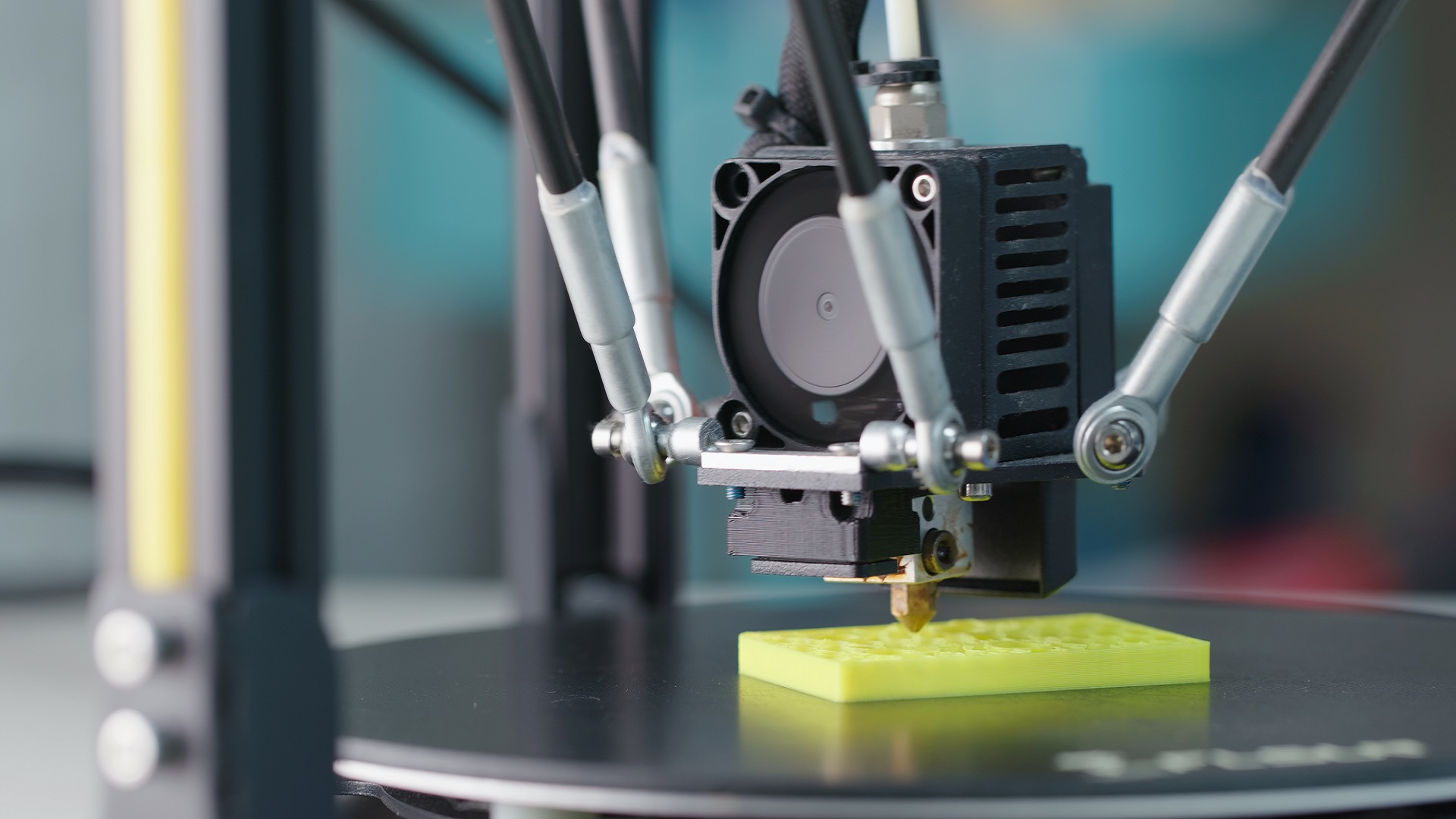
Since a 2014 launch, HP’s Multi Jet Fusion Industrial 3D printers printed over 170 million parts across the world for a variety of industries. Learn how this technology continues to push the boundaries of additive manufacturing.

Industrial 3D printer adopters have revealed how HP Multi Jet Fusion (MJF) technology is helping them cost-effectively scale plastic part production.

With the firm’s industrial 3D printers, the Jet Fusion 5200 and Jet Fusion 5420W, it’s now possible for users to manufacture end parts with high-reusability plastics, while optimizing cost and productivity. HP says these industrial 3D printing systems drive efficiency ‘per cubic inch,’ due to the labor and material cost savings gained from their high productivity and automation, as well as predictability, and their materials’ reusability.

Since launch, adopters ranging from robotics and machinery part producers to 3D printing service providers, like DI Labs, Prototal Industries, and Weerg, have each revealed how these manufacturing-ready industrial 3D printers are allowing them to meet their varying production needs.

Read more here.
3D Printing Industry

3D Printing Industry (3DPI) is a global media company providing a dedicated resource for anyone interested in 3D printing and 3D scanning — two fields of technology that are rapidly growing in relevance and application across industrial and consumer sectors.

More

Related

ASA Filament vs. ABS: Which Should You Use for Outdoor and UV-Exposed Parts?

ASA Filament vs. ABS: Which Should You Use for Outdoor and UV-Exposed Parts?

ABS is the default for functional 3D printing, but it has one fatal flaw outdoors: UV exposure breaks it down. ASA filament was engineered to fix that. It matches ABS on mechanical properties, prints easier in real-world setups, and holds up in sunlight where ABS does not. Here’s the chemistry, the spec comparison, and when each material is the right pick for your application.