Apply for MAST-P Support

Michigan manufacturers: Access capital and support services through the Michigan Auto Supplier Transition Program (MASTP) and position your business for the future of mobility.

Automation Alley Trade Missions

Your Gateway to New, High-Growth Markets.

Join Project DIAMOnD Academy

Register for the Integr8 2026 Series

Register for AME 2026

July 29-30 in Grand Rapids, MI 

How the 3D Printing in the Defense Industry Improves Operational Readiness Across Military Branches

by | Aug 29, 2025

Summary

Learn how 3D printing is reshaping military readiness across branches.

In today’s rapidly shifting global environment, supply chain resilience is mission-critical. The U.S. defense industry — from the Navy and Marines to the Army and Air Force — is embracing 3D printing in defense applications to reduce downtime, accelerate innovation, and improve battlefield readiness. 

By leveraging additive manufacturing for defense, warfighters can fabricate strong, lightweight parts on demand — anytime, anywhere. From shipboard 3D printing programs to airbase innovation labs, 3D printing technology empowers military personnel to print mission-critical parts in hours, rather than waiting weeks or months for traditional supply chains.

Army 3D Printing: Replacing Legacy Parts at Scale

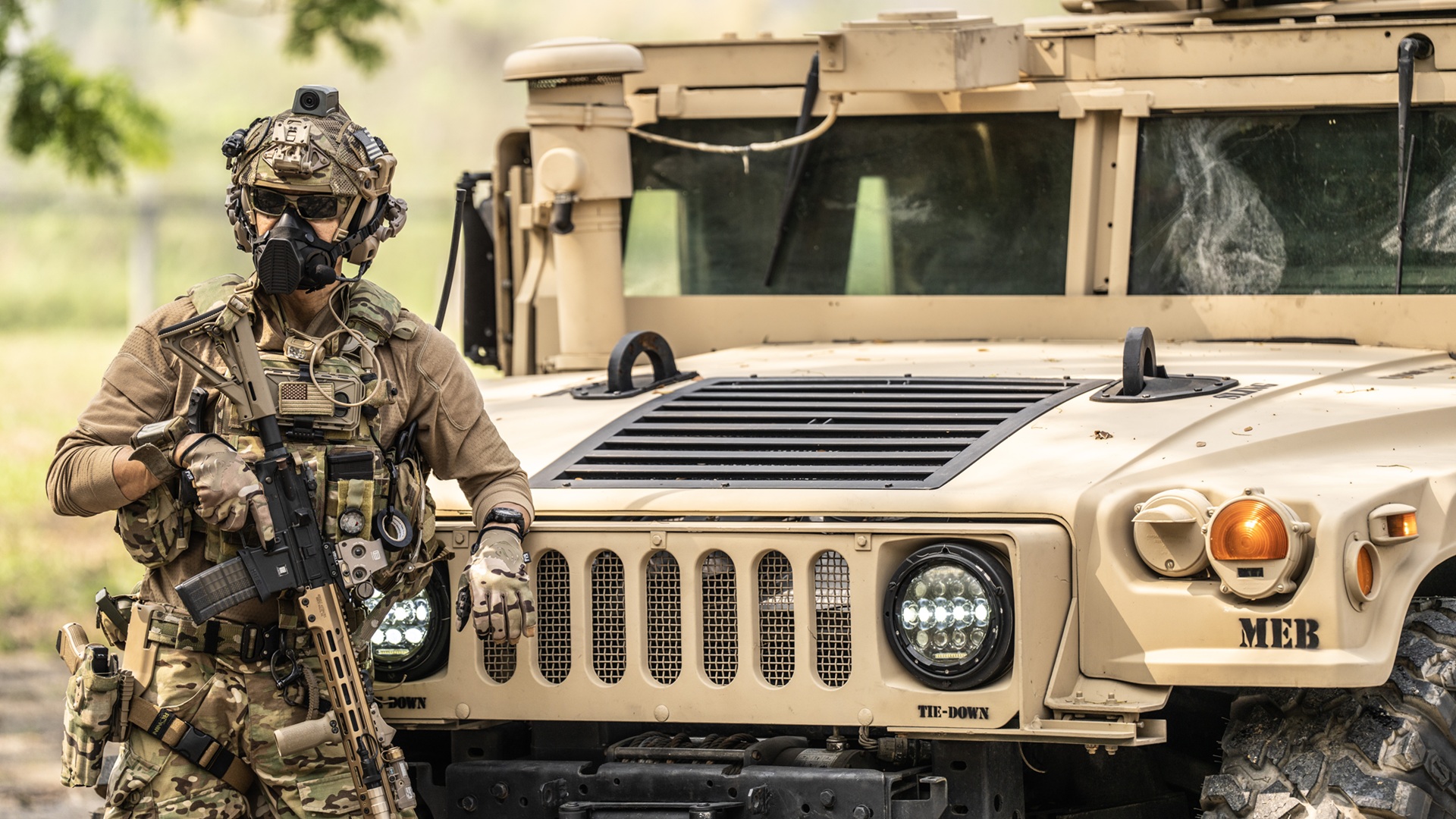
At Fort Irwin, Army regiments use Continuous Fiber Reinforcement (CFR) technology to print everything from personal protective equipment (PPE) to vehicle components. 

One notable success: a discontinued hatch plug, essential for night operations, previously cost $10,000 and had a 3-month lead time. With Markforged Onyx and 17-4PH stainless steel, the Army reproduced the part for less than $1,000, saving over $244,000 while ensuring operational readiness. 

Read this article in full here.
Markforged

We’re creating the technology and tools that make it easy for anyone to create production-quality parts, anywhere and anytime. So our customers can quickly solve manufacturing problems and build stronger supply chains—just by pressing print.

More

Related

ASA Filament vs. ABS: Which Should You Use for Outdoor and UV-Exposed Parts?

ASA Filament vs. ABS: Which Should You Use for Outdoor and UV-Exposed Parts?

ABS is the default for functional 3D printing, but it has one fatal flaw outdoors: UV exposure breaks it down. ASA filament was engineered to fix that. It matches ABS on mechanical properties, prints easier in real-world setups, and holds up in sunlight where ABS does not. Here’s the chemistry, the spec comparison, and when each material is the right pick for your application.