In terms of performance, standard 3D printing materials have a ceiling, and it’s lower than you think. PLA and ABS work fine for prototyping; they’re reliable when you’re just proving a concept, but the second you need parts to actually perform, the cracks start showing. They don’t have the backbone for real stress.
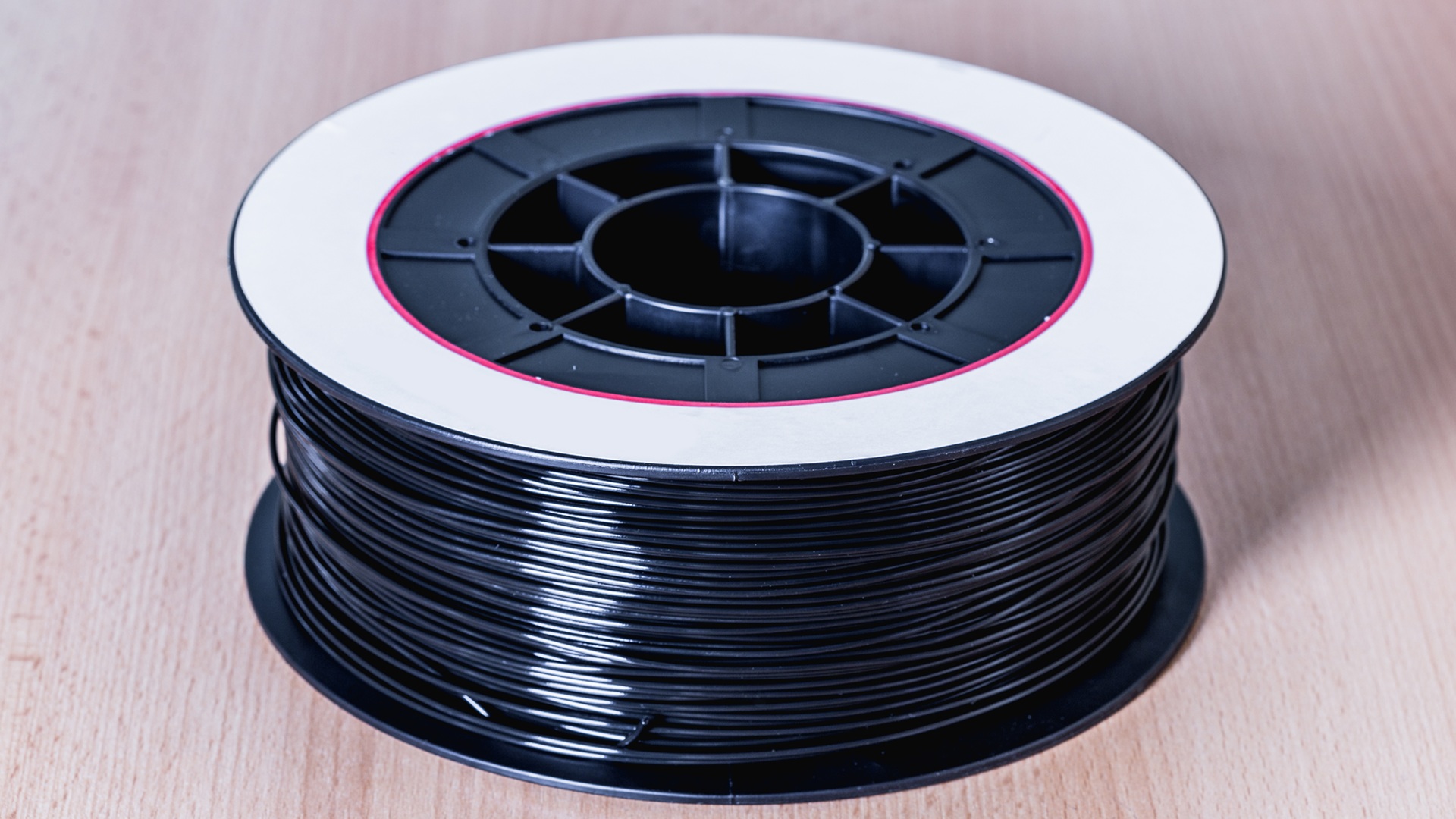
Carbon fiber filament changes the game completely. The mechanical properties rival what you’d get from traditional manufacturing, but you’re printing these parts at your desk. For high-stress 3D printing applications that need to handle serious loads, carbon fiber opens up possibilities that simply didn’t exist before. This is next-level fabrication.
Key Properties of Carbon Fiber Filament for Engineering-Grade Performance
Carbon fiber reinforcement transforms material behavior in ways that actually matter. What separates engineering-grade filament from standard 3D printing materials is how it handles stress, heat, and dimensional stability. The performance difference allows for builds that were once not possible.
Unmatched Strength-to-Weight: The Power of a Strong 3D Printer Filament
Carbon fiber cranks up material stiffness: measured as flexural modulus and is the key metric here: it defines how much a material resists bending under load.
What it means: parts that don’t bend when loaded, that keep their shape when precision is on the line. This is what makes carbon fiber the strongest 3D printer filament for functional parts. The jump from regular filament is substantial enough that you’ll reconsider what’s worth building.
The strength-to-weight ratio is where things get exciting. You’re getting structural integrity without the weight penalty of metal; critical for anything where mass matters. Aerospace, automotive, robotics: applications where every gram counts. This is why carbon fiber evolved from niche material to a game-changer.
Read this article in full here.
We manufacture all of our printers and filaments in our 68,000 ft² manufacturing facility (located in Grand Rapids, Michigan) using state-of-the-art equipment and processes. Our goal continues to be to make the most innovative filaments on the market – targeting difficult end-use applications where functionality is king.