What happens when the dominant tools of an industry are fundamentally replaced after nearly a century of stability? We can imagine the unease of a lathe operator watching a steam engine assume the rhythm once driven by a foot pedal. Or the quiet reckoning of a draftsman confronting AutoCAD in the 1980s, as pencil lines gave way to pixels.
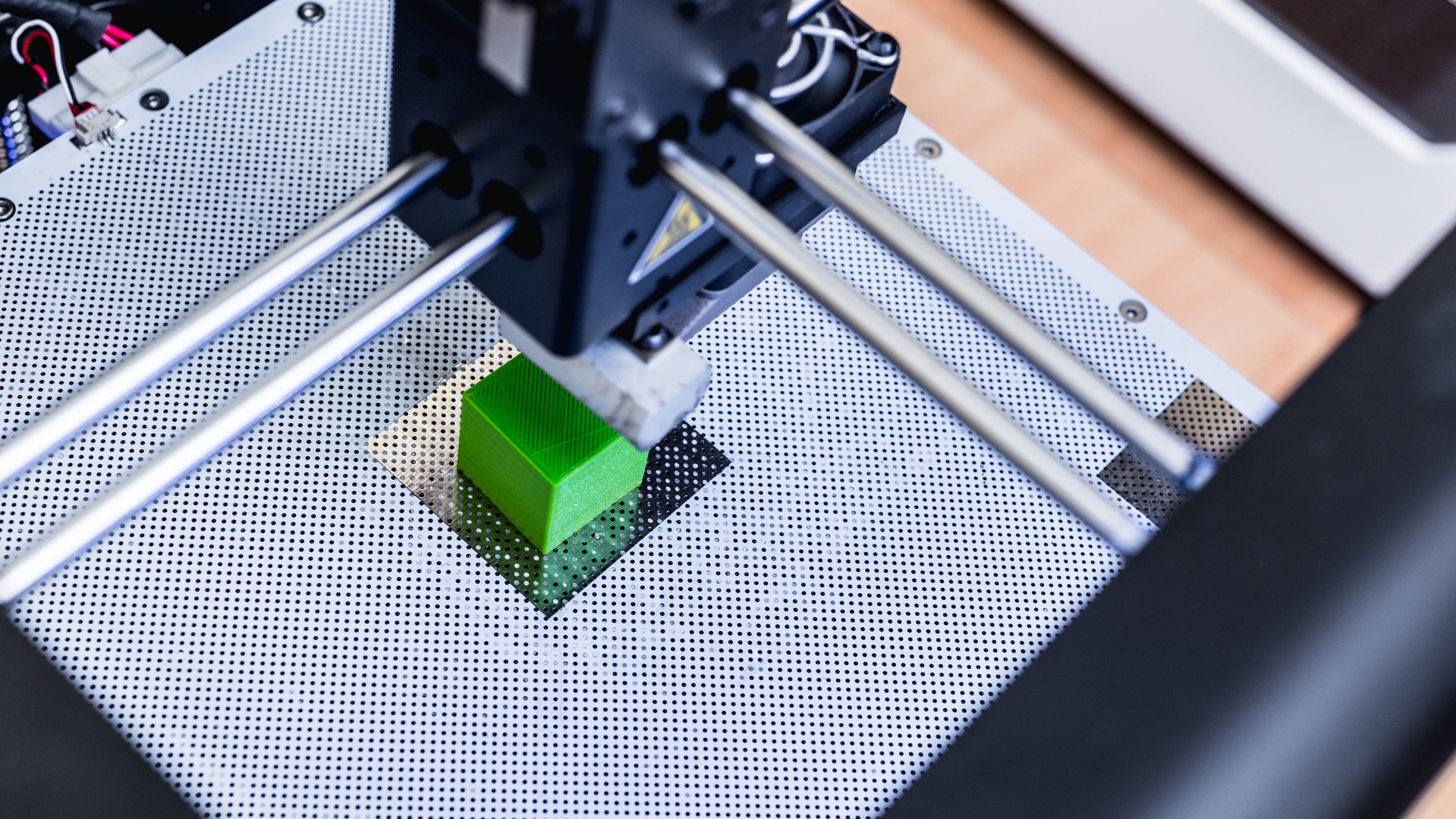
Today, additive manufacturing and artificial intelligence are driving a similar inflection point across industrial production. These are not incremental upgrades. They are redefining how products are designed, validated, manufactured and delivered.
But scaling AI-driven 3D printing is not as simple as installing new equipment or deploying software. It requires technical fluency, disciplined experimentation, workforce reskilling and cultural alignment around software-defined manufacturing.
To explore this convergence of AI in manufacturing and additive production, Automation Alley convened leaders from industry, academia, technology and government. The discussion focused on a central question:
Can AI finally move 3D printing from prototype tool to scalable production system?
Rewriting the Economic Model for Additive Manufacturing
Automation Alley COO and Project DIAMOnD CEO Pavan Muzumdar framed additive manufacturing’s long-standing economic tension: it performs exceptionally well in low-volume, high-complexity environments, but scaling introduces cost and qualification challenges.
Yet the technological environment has shifted.
- Lower-cost industrial sensors now enable real-time monitoring.
- Cloud infrastructure supports distributed manufacturing networks.
- Advanced slicing software embeds AI optimization.
- Secure digital workflows enable traceability and part validation.
These capabilities point toward Smart Product Recipes, or SPRs — machine-agnostic, software-defined instructions that standardize additive manufacturing across locations.
Glen Desmier, product manager at Inductoheat, described the structural shift in digital files themselves.
“SPRs the first format is stl, which is just a triangulated file, then came 3mf which contained properties to make the file more intelligent. What if we took it to the next level of intelligence with this Smart Product Recipe?”
Read the playbook in full here.