
Savvy businesses wouldn’t hire a chief financial officer who had never taken accounting, or recruit a music major as a product engineer. Why is it, then, that so many organizations fill quality control positions with people who have no formal subject matter education?
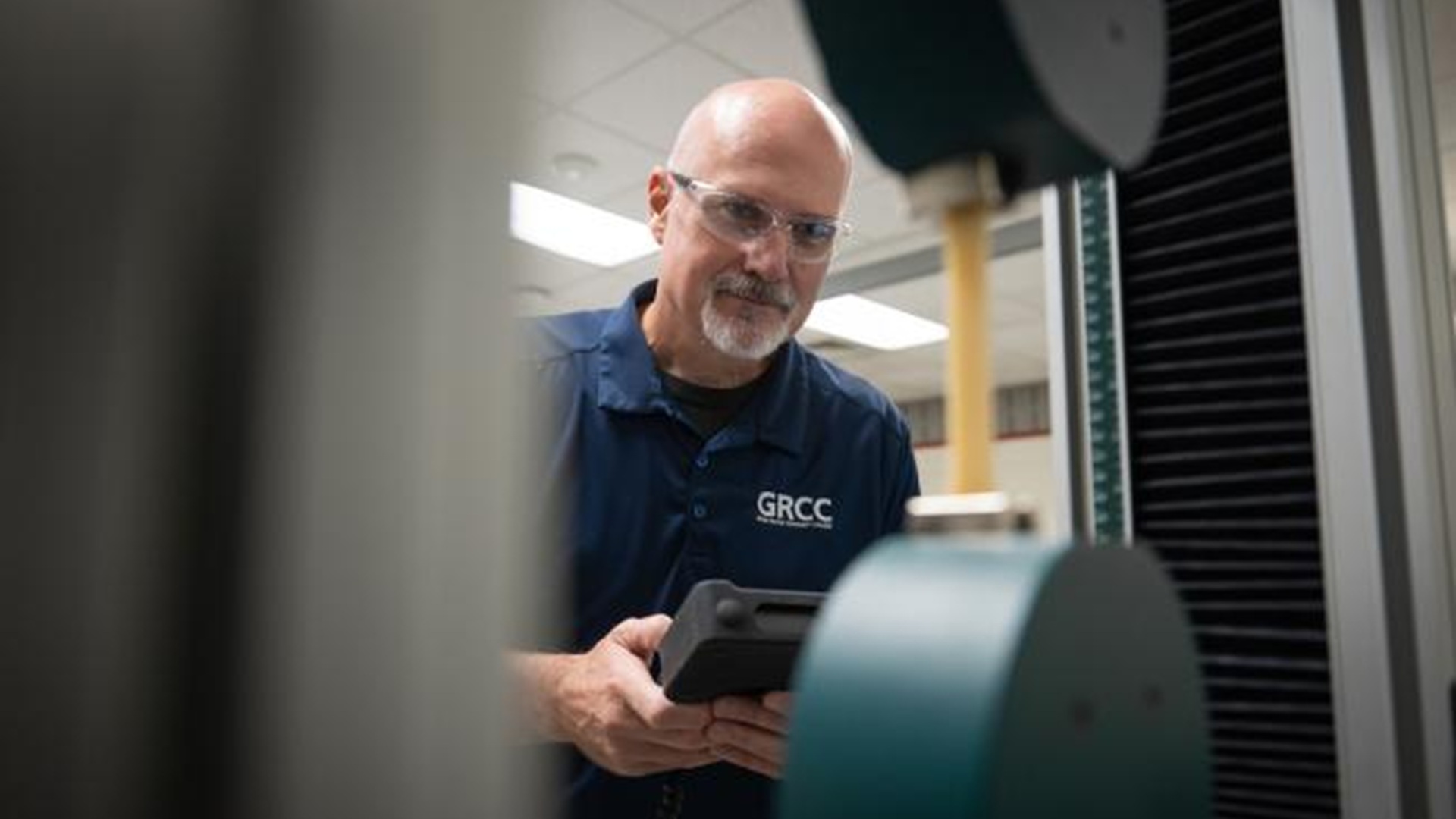
“People who end up working in quality control are often ‘voluntold’ into the position,” said Chris McDonald, department head and assistant professor of the Quality Science Certificate program at GRCC. “Someone with good problem solving skills or attention to detail gets drafted into this role. The challenge is that they don’t have a technical foundation upon which to build. If they’re learning from colleagues who also had no formal training, the company is, in essence, ‘making copies of bad copies’. Relying on second-hand knowledge creates bad habits that are hard to correct.”
While promoting from within is admirable, the whole purpose of quality control is to avoid errors. When the people responsible for quality do not have the technical knowledge to achieve that goal, the bottom line suffers.
“If we’re scrapping products, we’re losing money,” said Paulette Zebell, Quality and Training Manager for Atlas Molded Products. “Poor quality increases waste and rework, and damages customer relationships. It’s the fastest way to lose time and credibility.”
Read this article in full here.
Grand Rapids Community CollegeWe offer learners of all ages opportunities to gain credits for degrees or transfer and in-demand career skills leading to rewarding careers. GRCC was established in 1914 – Michigan’s first community college – and is focused on making a college education accessible and affordable. Classes are scheduled in person and online, on weekdays, evenings, Saturdays at locations throughout Kent and Ottawa counties. GRCC faculty and staff are committed to helping students succeed inside and outside the classroom, with student support services including, academic and career counseling, occupational and disability support and tutoring. GRCC has an average class size of under 25 students, giving students access to faculty members who are among the best in their fields, many known nationally and internationally. The college offers traditional liberal arts and occupational pathways, adult education courses, and skilled training courses and apprenticeships. Thousands of students each year take advantage of the Michigan Transfer Agreement to continue their education at a four-year college or university.