
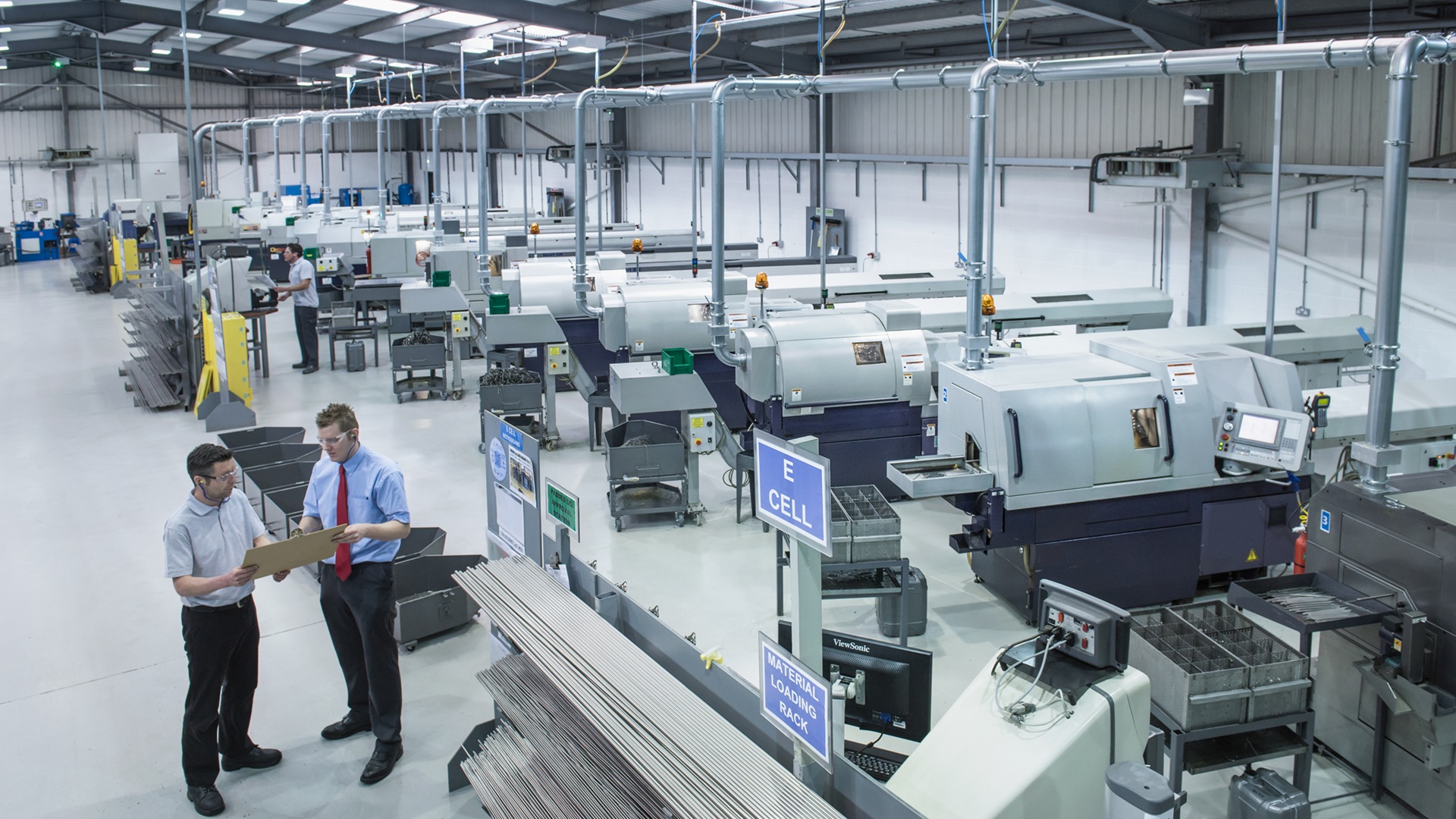
Manufacturing leaders are under increasing pressure to improve productivity, reduce costs and respond more quickly to changing market conditions. While automation has transformed many production environments over the past several decades, many organizations still struggle with one fundamental challenge: connecting operational technology (OT) with information technology (IT) to create a unified, data-driven enterprise.
Digital leadership is no longer defined by adopting the newest technologies. Instead, it is measured by an organization’s ability to integrate existing assets, modernize operations strategically and turn operational data into informed business decisions. This requires a deliberate approach that bridges production systems, business processes and supply chain operations.
For manufacturers, four priorities have emerged as critical components of digital leadership: enabling visibility into legacy equipment, consolidating production and business data, harmonizing supply chain and inventory management, and creating the operational foundation for continuous improvement.
Unlocking the value of legacy equipment
One of the biggest misconceptions surrounding digital transformation is that modernization requires replacing existing machinery. In reality, many manufacturers rely on equipment that has operated reliably for decades. These assets often represent significant capital investments and continue to perform their intended functions effectively.
The challenge is that many legacy machines were never designed to communicate with modern manufacturing execution systems (MES), enterprise resource planning (ERP) platforms or cloud-based analytics solutions, not to mention the business systems. Sensor technology provides an opportunity to bridge that gap.
By retrofitting legacy equipment with sensors that monitor machine status, cycle times, temperature, vibration, energy consumption or throughput, manufacturers can collect operational data that previously existed only on paper or in the experience of machine operators.
This approach allows organizations to:
- Monitor equipment utilization in real time.
- Identify production bottlenecks.
- Detect maintenance issues before failures occur.
- Measure overall equipment effectiveness (OEE).
- Build historical performance data without replacing production assets.
Rather than viewing older equipment as an obstacle to digital transformation, digital leaders recognize it as an untapped source of operational intelligence.
Bringing production data and business data together
Collecting data is only the first step. The real value comes from connecting production data with business information to provide a complete view of organizational performance.
In many manufacturing organizations, production systems, quality systems, ERP platforms, warehouse management software and financial systems all operate independently. Each generates valuable information, but isolated datasets often create conflicting reports, delayed decision-making and limited visibility across departments. Digital leadership focuses on eliminating the information silos.
When production metrics such as downtime, scrap rates, machine utilization, preventative maintenance, capitalization and throughput are integrated with business data—including customer demand, labor costs, purchasing information and financial performance—leaders gain a far more accurate understanding of operations.
Instead of asking, “How many units did we produce today?” organizations can answer more meaningful questions, including:
- Which production lines generate the highest margins?
- How do equipment failures affect customer delivery commitments?
- Which products consume the most manufacturing resources?
- Where are inventory shortages creating production delays?
- How do labor availability and production capacity affect profitability?
- What is the value of prescriptive preventative maintenance in terms of lost time not realized?
These insights allow operations, finance, engineering and executive leadership to work from the same information rather than separate reports generated by different departments. The result is faster decision-making supported by trusted, consistent data.
Harmonizing supply chain and inventory operations
Supply chain disruptions over the past several years have highlighted the importance of inventory visibility and production planning. Manufacturers are increasingly recognizing that production optimization cannot occur independently of supply chain performance.
Raw material availability, supplier reliability, warehouse inventory and customer demand all influence production schedules.
Without integrated data, manufacturers often rely on manual spreadsheets, disconnected purchasing systems or delayed inventory reports to make planning decisions. This creates unnecessary risks, including excess inventory, stock shortages and inefficient production scheduling. Digital leadership emphasizes harmonization rather than simply automation.
Harmonization means ensuring that inventory systems, procurement processes, warehouse operations and production planning all use consistent, synchronized information.
When operational data flows seamlessly across these functions, manufacturers can:
- Improve inventory accuracy.
- Reduce excess safety stock.
- Automate material replenishment.
- Better align purchasing with production schedules.
- Improve supplier collaboration.
- Increase production flexibility during supply chain disruptions.
Automation becomes more effective when it is built upon standardized, connected processes rather than isolated technology implementations.
Creating a connected production environment
The production environment generates enormous volumes of information every day. Machine events, operator activities, quality inspections, maintenance records and production schedules all contribute to understanding operational performance. Yet many organizations continue to manage these activities across disconnected systems.
Digital leadership seeks to create a connected production environment where information moves as efficiently as materials.
This does not necessarily require a complete replacement of existing systems. More often, it involves integrating technologies through standardized interfaces, industrial protocols and modern data platforms that allow information to flow between operational and business applications. The goal is not simply greater connectivity but greater context and insightful action.
A machine alarm becomes more valuable when it is linked to production schedules. Inventory data becomes more useful when connected to customer orders. Maintenance records become actionable when correlated with equipment performance trends. Quality metrics gain significance when evaluated alongside supplier performance and production variables. Financial performance becomes more manageable when integrated machine data and job cost data produce timely and accurate contribution margins. Each dataset contributes to a broader operational picture that supports continuous improvement initiatives.
The leadership challenge
Technology alone does not create digital transformation. Successful manufacturers understand that digital leadership requires organizational alignment as much as technical capability. Cross-functional collaboration between operations, engineering, maintenance, IT, finance and supply chain teams is essential for ensuring that data initiatives solve real business problems rather than simply generating additional reports.
Equally important is establishing governance around data quality, standard definitions, system integration and embedded workflows and compliance protocols. Inconsistent naming conventions, duplicate information and disconnected reporting structures can undermine even the most advanced analytics platforms.
Digital leaders prioritize building reliable data foundations before pursuing artificial intelligence, predictive analytics or advanced automation initiatives.
Looking ahead
As manufacturing continues to evolve toward more connected, intelligent operations, emerging technologies such as industrial IoT, edge computing, artificial intelligence and predictive analytics will undoubtedly play increasingly important roles in production environments.
However, these technologies deliver meaningful value only when supported by accurate, accessible and integrated into operational data platforms and insights.
Organizations that successfully modernize legacy equipment through sensor technology, consolidate production and business information, and harmonize supply chain and inventory operations position themselves to respond more quickly to changing market conditions while continuously improving operational performance.
Digital leadership is not about replacing everything that already works. It is about connecting the systems, people and processes that already exist, creating a manufacturing environment where decisions are driven by timely, trustworthy information.
As manufacturers continue navigating labor shortages, supply chain volatility and increasing customer expectations, those that treat data as a strategic operational asset—not simply a byproduct of production—will be best equipped to compete in an increasingly digital industrial landscape.
We help organizations reach their full potential by transforming complexity into clarity, aligning data and technology with strategic goals, and bridging the gap between raw data and real-world impact all while fostering a collaborative, intellectually engaging environment for our team.