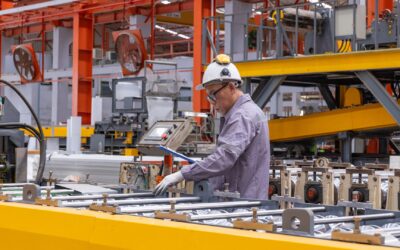
In the early 2000s, HIROTEC Corporation recognized a unique opportunity to build a new manufacturing facility from the ground up. Rather than simply replicating traditional manufacturing methods, the company set out to create a world-class operation focused on optimizing material flow, increasing production flexibility, and maximizing efficiency.
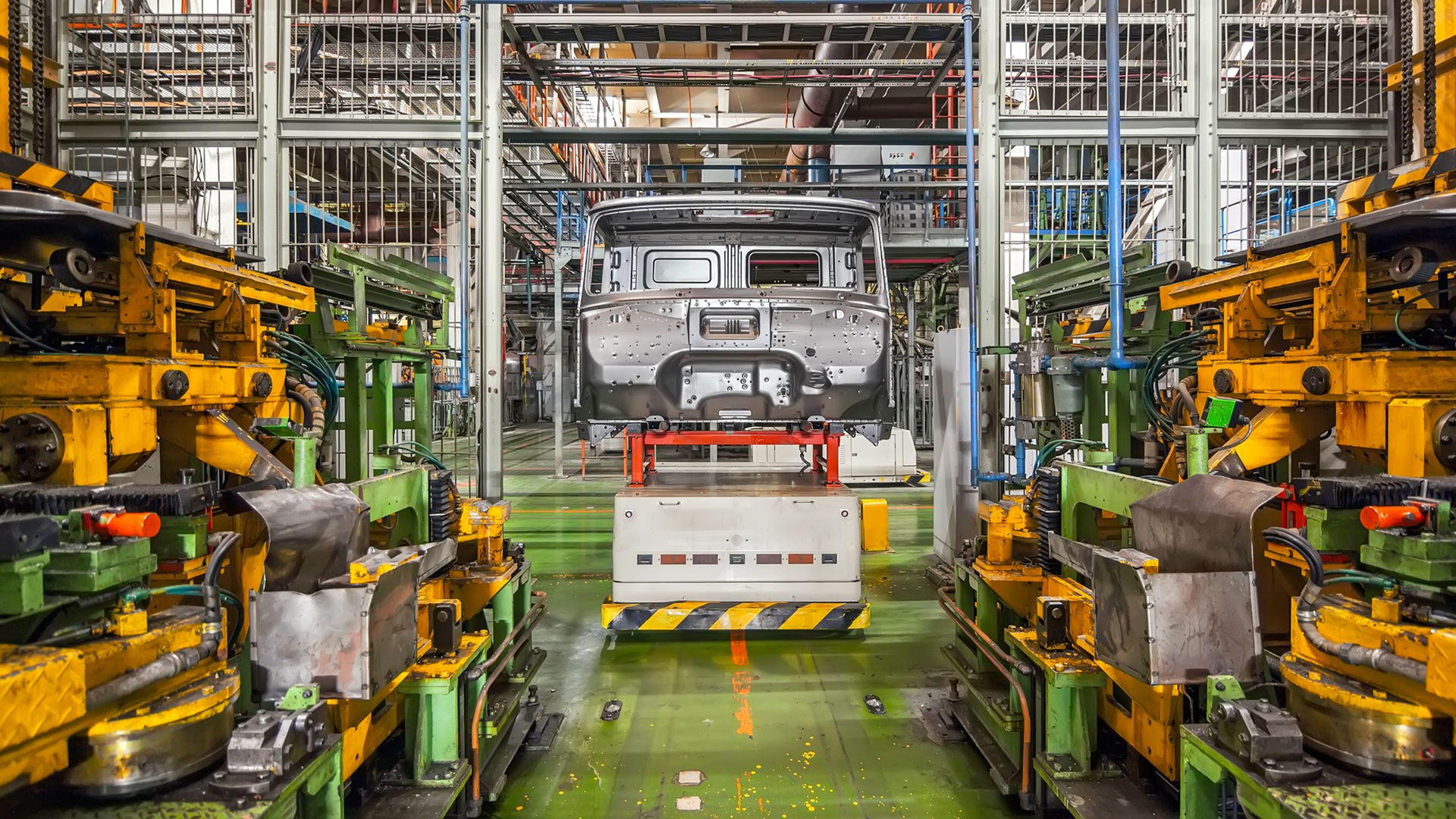
To accomplish this goal, HIROTEC assembled a dedicated team to evaluate emerging technologies and manufacturing best practices from around the world. The result was a highly advanced facility featuring state-of-the-art stamping lines with quick die change capabilities for both large Class A panels and small stamped components. The plant also incorporated an Automated Storage and Retrieval System (ASRS) integrated with Automated Guided Vehicles (AGVs) to efficiently move materials throughout the facility.
On the assembly side, HIROTEC introduced a new multi-model manufacturing system utilizing servo-electric presses, rapid tool and jig changeovers, and automated part introduction processes. Leveraging technologies developed through collaboration with key customers, the company created a highly flexible production environment capable of producing numerous product variants on common production lines. This innovation allowed HIROTEC to consolidate 28 dedicated assembly lines into just three flexible manufacturing lines capable of producing all 28 models.
Developing the Zero-Operator Sub-Assembly System
As these systems matured, the Engineering and Production Engineering teams continued to pursue new opportunities for improvement. Their efforts led to the development of the Zero-Operator Sub-Assembly System in 2012. This groundbreaking initiative represented a significant step toward autonomous manufacturing and challenged the organization to rethink traditional production methods.
The new system required the Production Maintenance team to develop entirely new skills. In addition to maintaining equipment, they became responsible for developing standardized procedures for automated jig changeovers, material movement, and the handling of both raw materials and finished goods. The initial implementation allowed production cells to operate without direct human intervention for up to four hours at a time, proving that autonomous manufacturing was achievable.
Building on this success, the team turned its attention upstream. Engineers redesigned the flow of small stamped components so that parts exited the stamping process already stacked in the correct orientation for automated loading into sub-assembly operations. This eliminated the need for manual handling and part reorientation. Similar innovations were developed for large Class A panels, including automated systems that stacked components and loaded them directly into assembly line racks. These improvements further reduced labor requirements while improving quality and consistency throughout the manufacturing process.
Building the Next Generation
By this time, HIROTEC’s original Generation 1 (M0) Closure Assembly System had been operating successfully for more than twelve years. However, as the equipment began to age and require major replacement investments, management presented Engineering and Production Engineering with a new challenge: develop a next-generation manufacturing system capable of operating with zero production operators.
The result was the Generation 2 (A0) Closure Assembly System, a platform built upon decades of manufacturing experience and innovation from around the world. Guided by the vision to “Strive for Manufacturing Excellence, Open New Doors, and Assemble the Future with Zero Operators,” the team designed a revolutionary smart manufacturing system that integrated advanced automation technologies throughout the entire production process.
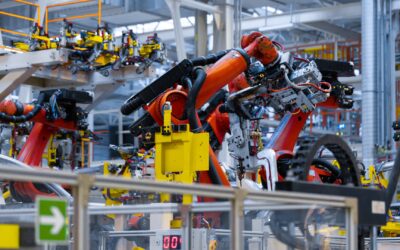
The GEN 2 system incorporated Autonomous Mobile Robots (AMRs), laser marking systems, hose-less sealer and mastic pumping technology, automated weld tip changing, automated tip dress inspection, Industrial Internet of Things (IIoT) connectivity, automated part loading, advanced vision inspection systems, and HIROTEC’s innovative steerable roller hemming technology with lightweight anvils for smooth automated model changeovers.
Designing Upward Rather Than Outward
However, the team faced another major challenge. The new system had to fit within a footprint 30% smaller than the original GEN 1 line.
To achieve this goal, engineers fundamentally changed how manufacturing space was utilized. Traditional assembly systems largely rely on horizontal layouts that consume significant floor space. The GEN 2 concept instead leveraged the facility’s vertical space as a key design feature.
Material storage, delivery systems, process equipment, utilities, and buffer zones were strategically integrated above production areas. Multi-level platforms, overhead transport systems, and elevated equipment structures allowed manufacturing functions to occupy the same floor space while utilizing the full height of the facility. By designing upward rather than outward, HIROTEC successfully reduced floor space requirements without sacrificing capacity, flexibility, or performance.
Transforming Maintenance Operations
The vertical design also transformed maintenance operations. Production Maintenance personnel had to expand their expertise beyond traditional mechanical systems to include robotics, controls, sensors, networks, automated material handling systems, and predictive maintenance technologies. Elevated equipment required new safety procedures, access methods, and maintenance strategies. With the integration of IIoT technologies and real-time equipment monitoring, maintenance evolved from a reactive function into a proactive organization focused on reliability and system performance.
The success of the GEN 2 Closure Assembly System was not simply the result of advanced technology. It was the culmination of years of continuous improvement, engineering innovation, and organizational development. By combining autonomous manufacturing, intelligent automation, advanced material handling, vertical space utilization, and a highly skilled maintenance organization, HIROTEC created a true Smart Factory experience.
Today, the GEN 2 Closure Assembly System stands as a demonstration of what is possible when innovation, engineering excellence, and a relentless pursuit of improvement come together. More than a replacement for aging equipment, it represents HIROTEC’s vision for the future of manufacturing: a highly flexible, fully connected, zero-operator production environment designed to meet the demands of the next generation of automotive manufacturing.
Read more about lights-out manufacturing in our Integr8 Playbook, “Lights-Out Manufacturing: The Autonomous Factory & the Human Advantage,” here.
HIROTEC AMERICA, Inc. is part of the HIROTEC Group Companies that have worldwide sales in excess of 1.5 billion dollars and 29 facilities in 8 countries. For close to 30 years, HIROTEC AMERICA has been providing innovative and highly flexible closure manufacturing solutions to automotive customers around the world.