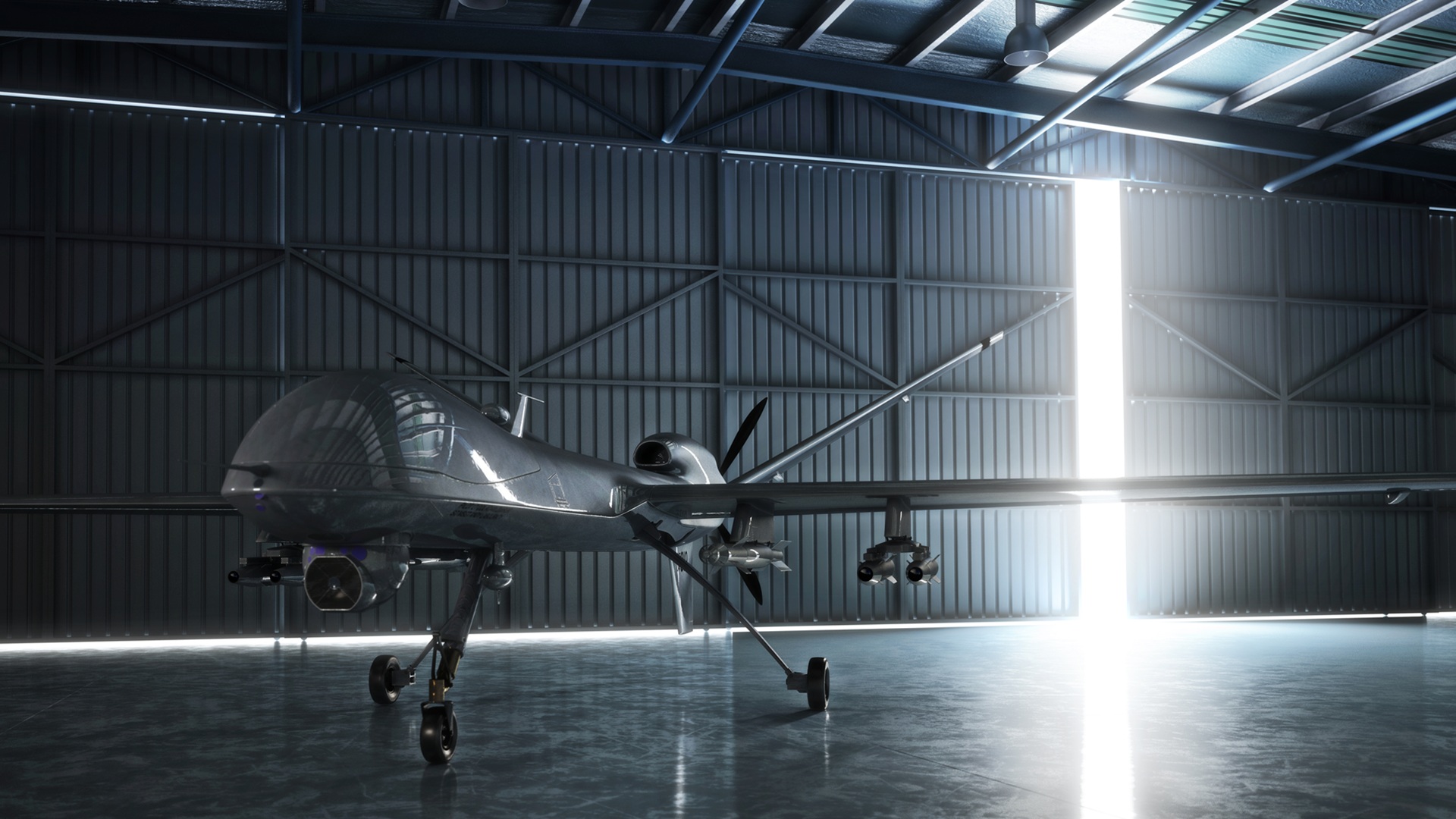
Fixed-wing unmanned aerial vehicles (UAVs) are increasingly used for defense, aerospace, and commercial applications that require long-range, efficient flight. As mission requirements evolve and production timelines shrink, manufacturers need faster ways to design, test, and manufacture airframes without sacrificing performance.
Industrial additive manufacturing offers a flexible approach. It enables manufacturers to rapidly iterate designs, reduce tooling requirements, and produce lightweight, flight-ready components using engineering-grade thermoplastics. This guide explains how 3D printed fixed-wing drones are designed, manufactured, and validated for production applications
What Is a 3D Printed Fixed-Wing Drone
A 3D printed fixed-wing drone is an unmanned aerial vehicle (UAV) with rigid, stationary wings where key structural components, such as the fuselage, wings, and internal supports, are manufactured using additive manufacturing.
These 3D printed fixed-wing drones use aerodynamic lift generated by their wings for efficient forward flight, enabling longer range and endurance compared to multirotor systems. By leveraging industrial 3D printing, manufacturers can produce lightweight, customizable airframes optimized for defense, aerospace, and commercial missions.
Not every component of a fixed-wing UAV needs to be 3D printed. Manufacturers often combine printed thermoplastic structures with composite spars, machined inserts, electronics, and conventional hardware to optimize weight, strength, and manufacturability.
Read this article in full here.