Apply for MAST-P Support

Michigan manufacturers: Access capital and support services through the Michigan Auto Supplier Transition Program (MASTP) and position your business for the future of mobility.

Automation Alley Trade Missions

Your Gateway to New, High-Growth Markets.

Join Project DIAMOnD Academy

Register for the Integr8 2026 Series

Register for AutoTech 2026

Register for AME 2026

July 29-30 in Grand Rapids, MI 

‘Bioconstruction’ will build homes out of flowering, 3D-printed dirt

by | Sep 22, 2022

Summary

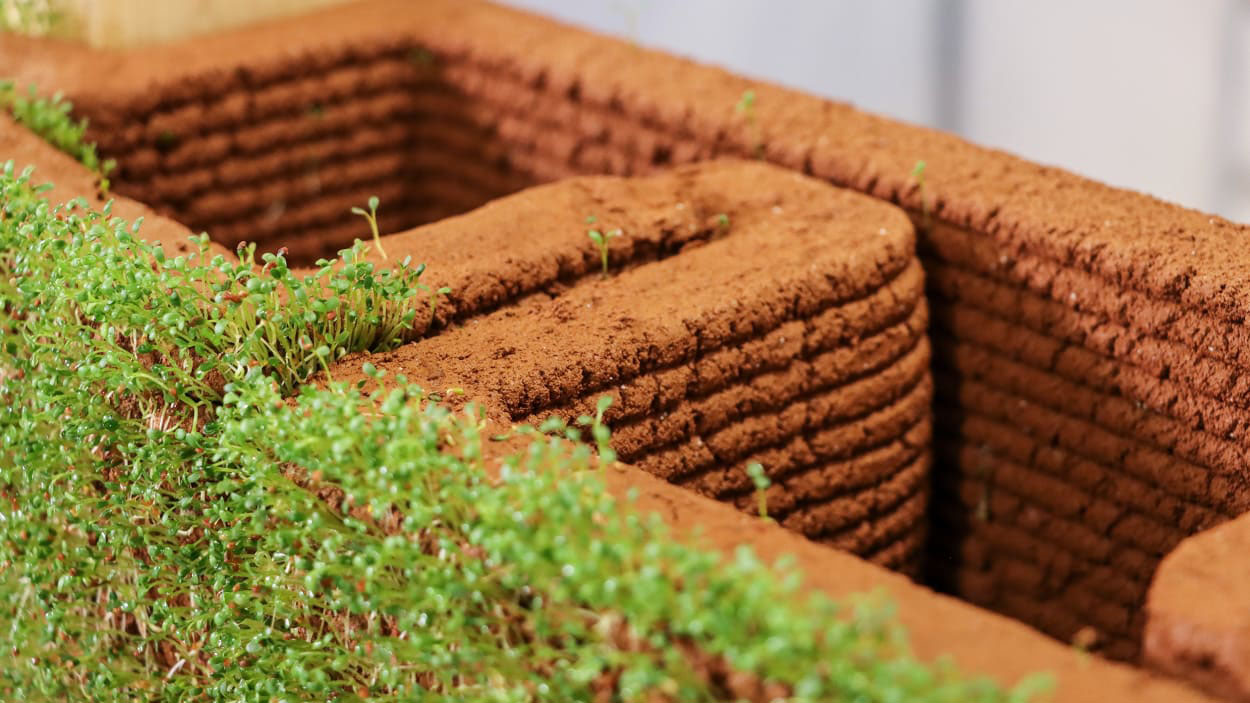
Using soil as the material for 3D printing expands its architectural potential.

The walls of your home usually need to be spruced up with paint or some art, but one day they may be teeming with life instead.

Through a new approach to 3D printing, soil implanted with seeds can now be used as a concrete-like building material. Developed by a multidisciplinary team of researchers at the University of Virginia, this building technique could open up doors to a completely new kind of building, with finely tuned ecosystems of plants and bacteria forming the insulation, the structure, even the exteriors of homes.

“It becomes like a living tissue within your house,” says Ji Ma, an assistant professor of materials science and engineering at UVA who led this research, which was recently published in the journal Additive Manufacturing.

Read full article

Fast Company

Fast Company is the world’s leading business media brand, with an editorial focus on innovation in technology, leadership, world changing ideas, creativity, and design. Written for and about the most progressive business leaders, Fast Company inspires readers to think expansively, lead with purpose, embrace change, and shape the future of business.


More

Related

ASA Filament vs. ABS: Which Should You Use for Outdoor and UV-Exposed Parts?

ASA Filament vs. ABS: Which Should You Use for Outdoor and UV-Exposed Parts?

ABS is the default for functional 3D printing, but it has one fatal flaw outdoors: UV exposure breaks it down. ASA filament was engineered to fix that. It matches ABS on mechanical properties, prints easier in real-world setups, and holds up in sunlight where ABS does not. Here’s the chemistry, the spec comparison, and when each material is the right pick for your application.