
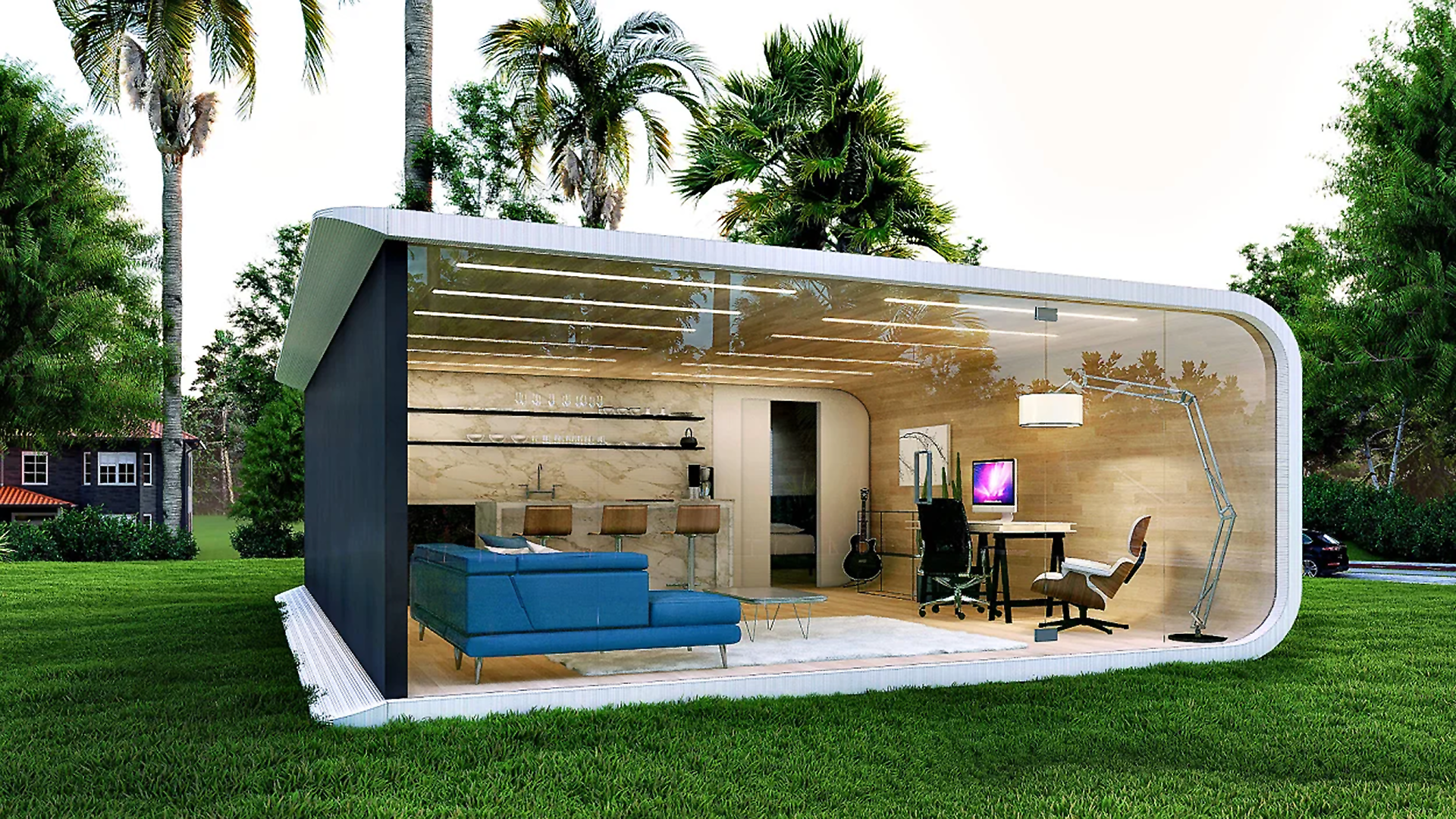
Backyard cottages have been hailed as a way to quickly add new rental space in cities with a shortage of housing. But they’re typically expensive to build.
In L.A., where the city government has been trying to nudge homeowners to build more ADUs, or accessory dwelling units, the average construction price for a new cottage starts at $150,000 and goes up to around $350,000, not including building plans, engineering work, and other expenses.
A startup called Azure Printed Homes is taking a different approach: By 3D-printing the roof, floor, and walls with recycled plastic, and building the rest of the home inside a factory, it keeps costs lower. A simple backyard studio apartment, with a tiny kitchen and a bathroom, starts at $39,900. The foundation, delivery, utility hookups, and other costs add about 25% to 30% to the total, but it’s still far less expensive than most alternatives.
Fast Company is the world’s leading business media brand, with an editorial focus on innovation in technology, leadership, world changing ideas, creativity, and design. Written for and about the most progressive business leaders, Fast Company inspires readers to think expansively, lead with purpose, embrace change, and shape the future of business.