Apply for MAST-P Support

Michigan manufacturers: Access capital and support services through the Michigan Auto Supplier Transition Program (MASTP) and position your business for the future of mobility.

The Battery Show North America

OCTOBER 12-15, 2026, Huntington Place, Detroit, MI

Automation Alley Trade Missions

Your Gateway to New, High-Growth Markets.

Join Project DIAMOnD Academy

Register for the Integr8 2026 Series

Wire Arc Additive Manufacturing: Key insights

by | Feb 26, 2025

Summary

Explore the challenges and advantages of Wire Arc Additive Manufacturing (WAAM) in terms of scalable metal 3D printing with high deposition rates for industrial applications.

Due to recent advancements in processes and systems, Additive Manufacturing (AM) has garnered significant attention in Industry and Research. The complexity and resolution achieved are the primary factors that determine the choice of an AM process.

In AM, new technologies have emerged, each offering unique capabilities and applications. Today, we’re focusing on one prominent method: Wire Arc Additive Manufacturing (WAAM).

In this blog, we’ll delve into this technique and the issues and common challenges associated with WAAM, uncovering the complexities and exploring potential solutions and innovations in metal AM.

1. Introduction to WAAM, Powder Bed Fusion and Meltio’s Wire-Laser Metal Deposition process (W-LMD)

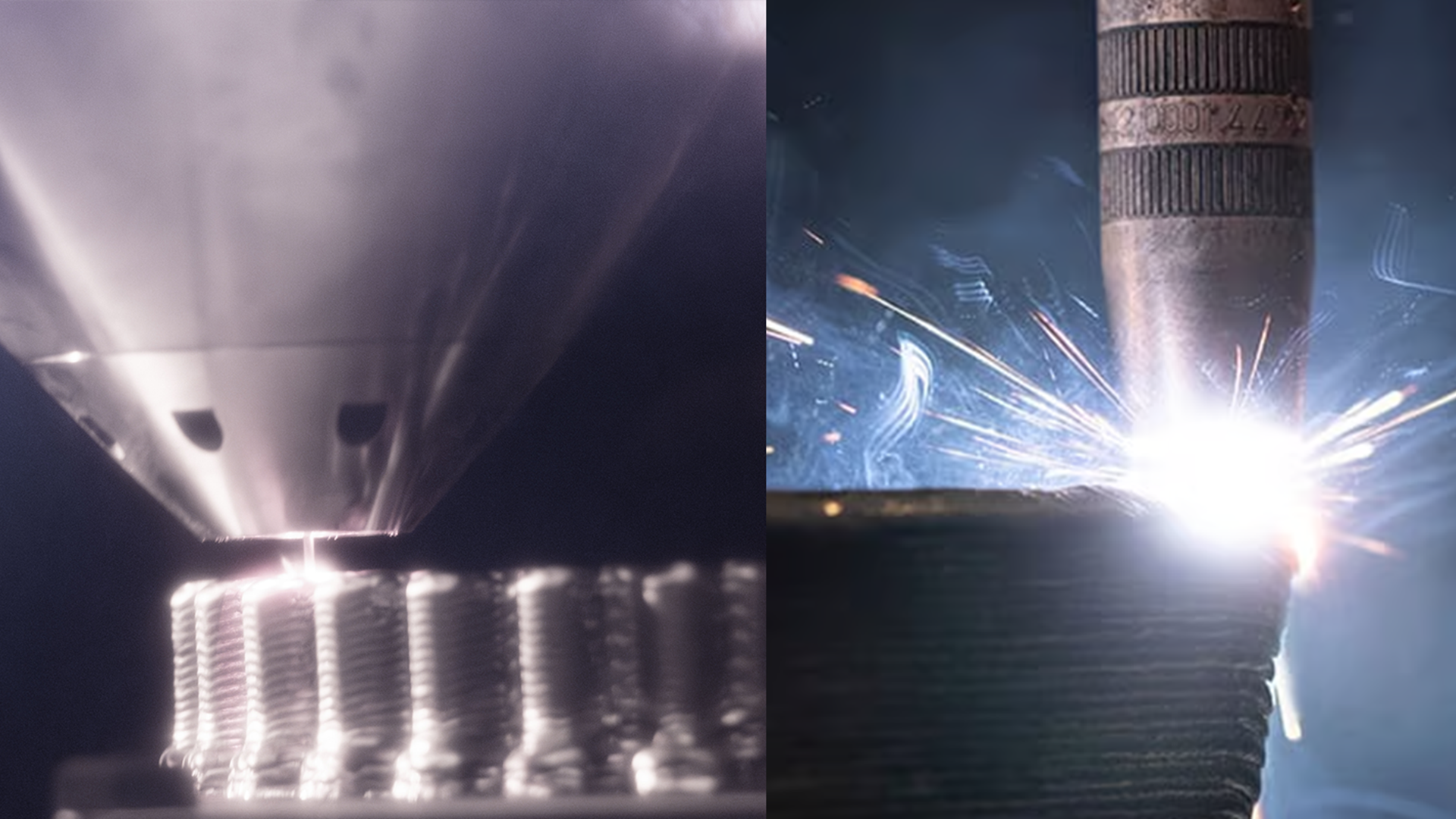
Among the different metal additive manufacturing (AM) techniques, these can be broadly categorized into two main families: Powder-based and Wire-based. In the powder-based category, key methods include Powder Bed Fusion (PBF) and Laser-Powder Directed Energy Deposition (DED). In the wire-based category, notable techniques are Wire Arc Additive Manufacturing (WAAM) and Meltio’s Wire-Laser Metal Deposition (W-LMD) are the most employed in industrial settings.

Read this article in full here.
Automation Alley

More

Additive Manufacturing in the Automotive Industry

What is Automotive Additive Manufacturing? Automotive additive manufacturing (AM) is the process of creating vehicle components by layering materials based on digital 3D models. It allows for rapid prototyping, the production of complex geometries, and the creation of...

Related

Additive Manufacturing in the Automotive Industry

Additive Manufacturing in the Automotive Industry

Automotive manufacturers are using additive manufacturing to accelerate product development, reduce tooling lead times, support low-volume production, and produce replacement parts on demand. This guide explores the key applications, benefits, challenges, materials, and technologies shaping automotive 3D printing, along with real-world examples of how manufacturers are putting additive manufacturing into practice.