Apply for MAST-P Support

Michigan manufacturers: Access capital and support services through the Michigan Auto Supplier Transition Program (MASTP) and position your business for the future of mobility.

The Battery Show North America

OCTOBER 12-15, 2026, Huntington Place, Detroit, MI

Automation Alley Trade Missions

Your Gateway to New, High-Growth Markets.

Join Project DIAMOnD Academy

Register for the Integr8 2026 Series

Advanced Multi-Color and Full-Color 3D Printing

by | May 16, 2025

Summary

Stratasys highlights how full-color 3D printing with PolyJet technology empowers designers to produce ultra-realistic prototypes featuring Pantone-validated colors, lifelike textures, and multi-material finishes, streamlining the design process from concept to final product.

Have you ever picked up a 3D print and had to do a double take? That’s the power of full-color 3D printing – it blends realism, brand accuracy, and tactile design into a single, seamless build.

So what exactly is the difference between color 3D printing, multi-color 3D printing, and true full-color 3D printing? Can one machine do it all? And which technology fits your application?

This article aims to answer all your questions about 3D printing in color – and show you what’s possible with industrial-standard full-color 3D printing from Stratasys.

What’s the Difference Between Multi-Color 3D Printing and Full-Color 3D Printing?

Full-color 3D printing and multi-color 3D printing are often used interchangeably, but if we’re being accurate, there is a difference.  

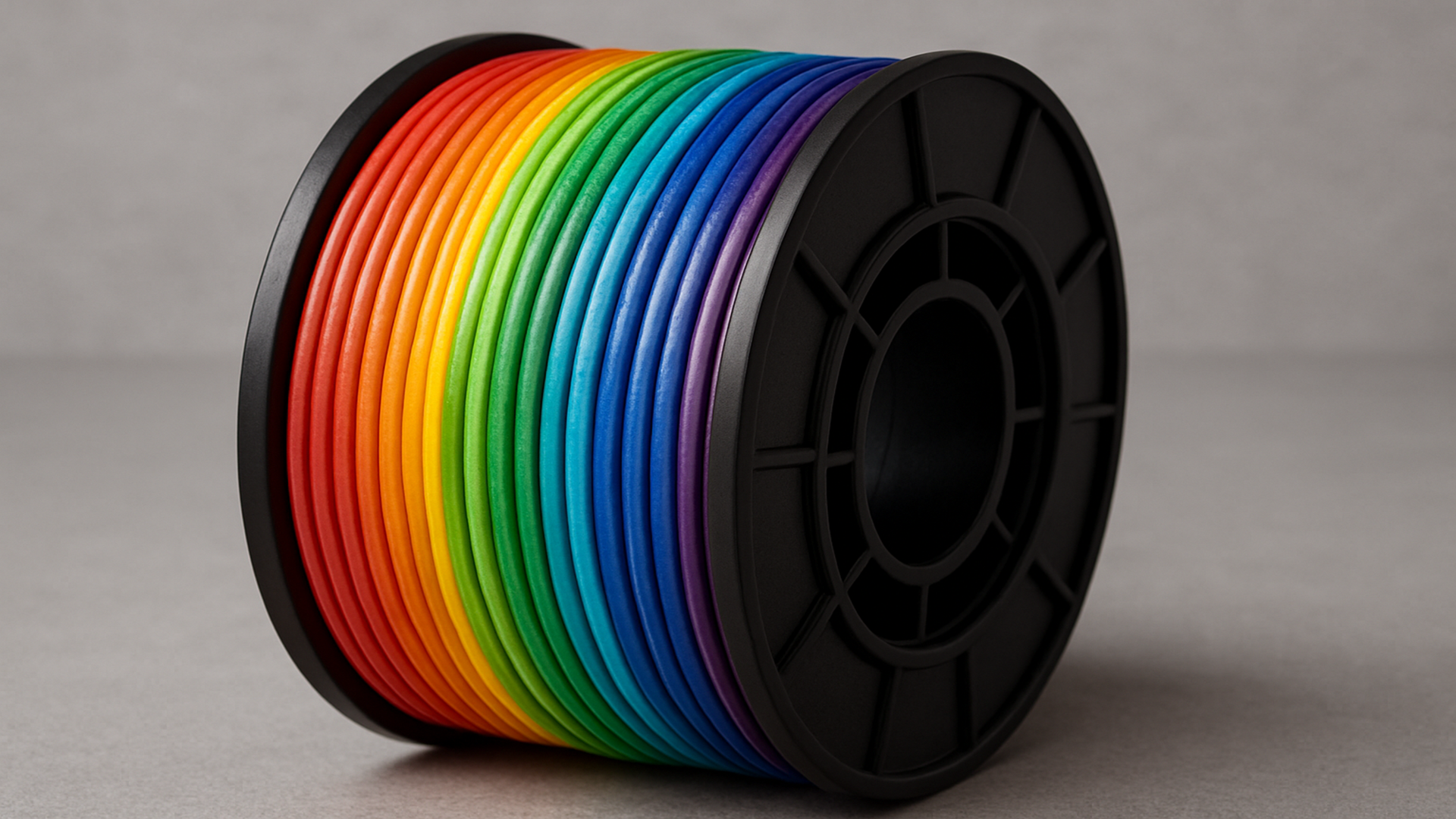
Full-color 3D printing colors a base material as it prints (just like your CMYK 2D desktop printer), creating photo-realistic parts with subtle color gradients, textures, and branding accuracy. In fact, full-color 3D printing blends CMYKW (Cyan, Magenta, Yellow, Black, and White) materials in fine layers to produce vivid, Pantone-accurate results. It’s ideal for consumer packaging prototypes, anatomical models, and anything that needs to look realistic.

By contrast, multi-color 3D printing uses pre-colored filaments or resins to create separate zones of color. There’s no blending – just clear, distinct color areas. This makes multi-color 3D printing ideal for fixtures, functional prototypes, and safety-critical components where visual clarity matters.


Whether you choose full-color 3D printing or multi-color 3D printing, the right choice depends on how your part needs to look, feel, and function.

Read the article in full here.

Stratasys

Stratasys, Ltd. is an American-Israeli manufacturer of 3D printers and 3D production systems for office-based rapid prototyping and direct digital manufacturing solutions.‍

More

Additive Manufacturing in the Automotive Industry

What is Automotive Additive Manufacturing? Automotive additive manufacturing (AM) is the process of creating vehicle components by layering materials based on digital 3D models. It allows for rapid prototyping, the production of complex geometries, and the creation of...

Related

Additive Manufacturing in the Automotive Industry

Additive Manufacturing in the Automotive Industry

Automotive manufacturers are using additive manufacturing to accelerate product development, reduce tooling lead times, support low-volume production, and produce replacement parts on demand. This guide explores the key applications, benefits, challenges, materials, and technologies shaping automotive 3D printing, along with real-world examples of how manufacturers are putting additive manufacturing into practice.