What Is SLA 3D Printing?
Stereolithography (SLA) is one of the oldest additive manufacturing processes around — and still the go-to when engineers need parts with tight tolerances and clean finishes. The concept behind SLA 3D printing is simple: a UV laser cures liquid photopolymer resin into solid plastic, one layer at a time.
The resin sits in a resin vat while the laser traces each cross-section across the surface. Wherever it hits, the material hardens almost instantly. The SLA printer then drops the build platform a fraction and repeats the process until the part is complete.
It delivers a precision that makes SLA printing stand out for accurate, detailed and high-surface quality prototypes and models.
How SLA Printing Works Step by Step
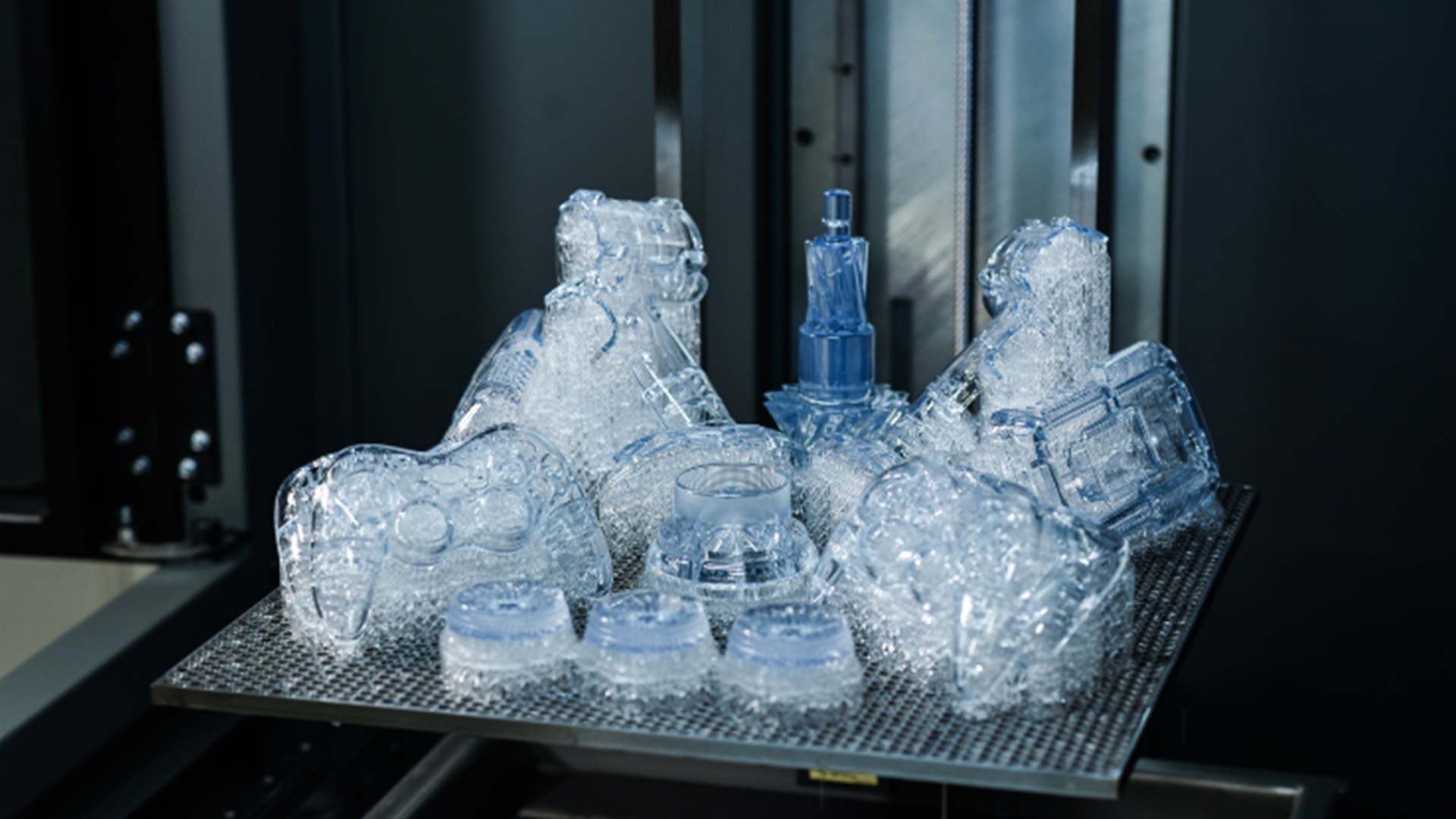
Stereolithography (SLA) 3D printing is an additive manufacturing process that uses a vat of liquid, UV-curable photopolymer resin and a precision UV laser to build parts one layer at a time. The laser cures the resin, gradually forming the part within the vat, while the build platform lowers to the specified thickness, repeating the process until the part is fully formed. After printing the build platform lifts the finished part out of the resin vat. Support material is removed and the parts are cleaned in solvent to remove uncured resin. Finally, parts are placed into a UV curing unit to complete the polymerization process and allow parts to achieve their full mechanical properties.
Read this article in full here.