
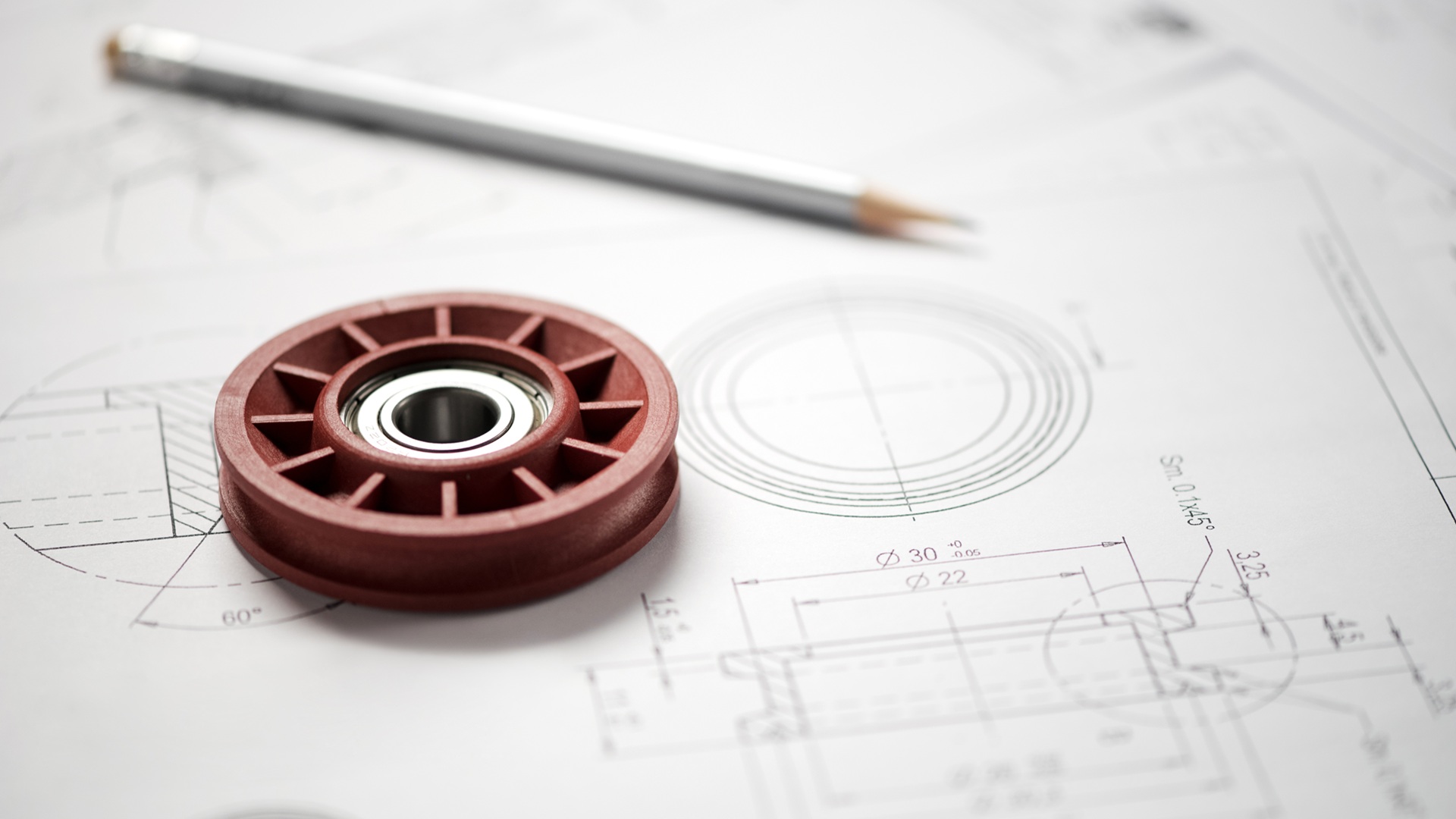
In today’s manufacturing landscape, where data drives decisions and automation accelerates production, an uncomfortable truth remains: many organizations still don’t actually know whether the data they’re collecting is the right data. Sensors, quality stations, SPC tools, and analytics platforms capture millions of data points, yet operations leaders continue to struggle with unresolved variation issues, recurring build problems, and quality surprises that seem to appear out of nowhere.
Why? Because in manufacturing, data is only as good as the specifications behind it—and nowhere is this more apparent than in the realm of Geometric Dimensioning & Tolerancing (GD&T).
Across industries, the question “Who owns the Design/GD&T?” has never been answered clearly. And that ambiguity is creating costly inefficiencies at every stage of the product lifecycle.
This article summarizes the core challenges and introduces the premise of our new whitepaper, Total Design Responsibility in Manufacturing: Who Owns the GD&T?, which explores a more unified, futureready approach.
The Hidden Problem: GD&T Is Applied Too Late, and by Too Many Different Owners
During product development, engineers are focused on performance, packaging, simulations, and meeting program timelines. As a result, GD&T, one of the most critical components of producibility, often becomes an afterthought, added quickly in early design phases or inherited from prior programs with minimal scrutiny.
Read this article in full in our 2026 Integr8 Playbook on Data & Industrial Intelligence here.
Metrologic DCS combines best-in-class industrial metrology and dimensional engineering expertise. Metrologic Group contributes its best-in-class universal 3D metrology software, multi-sensor measurement execution, and interoperability across machines and technologies. DCS is the world leader in dimensional engineering and variation analysis. Together, these complementary capabilities create a unique, end-to-end approach to quality.