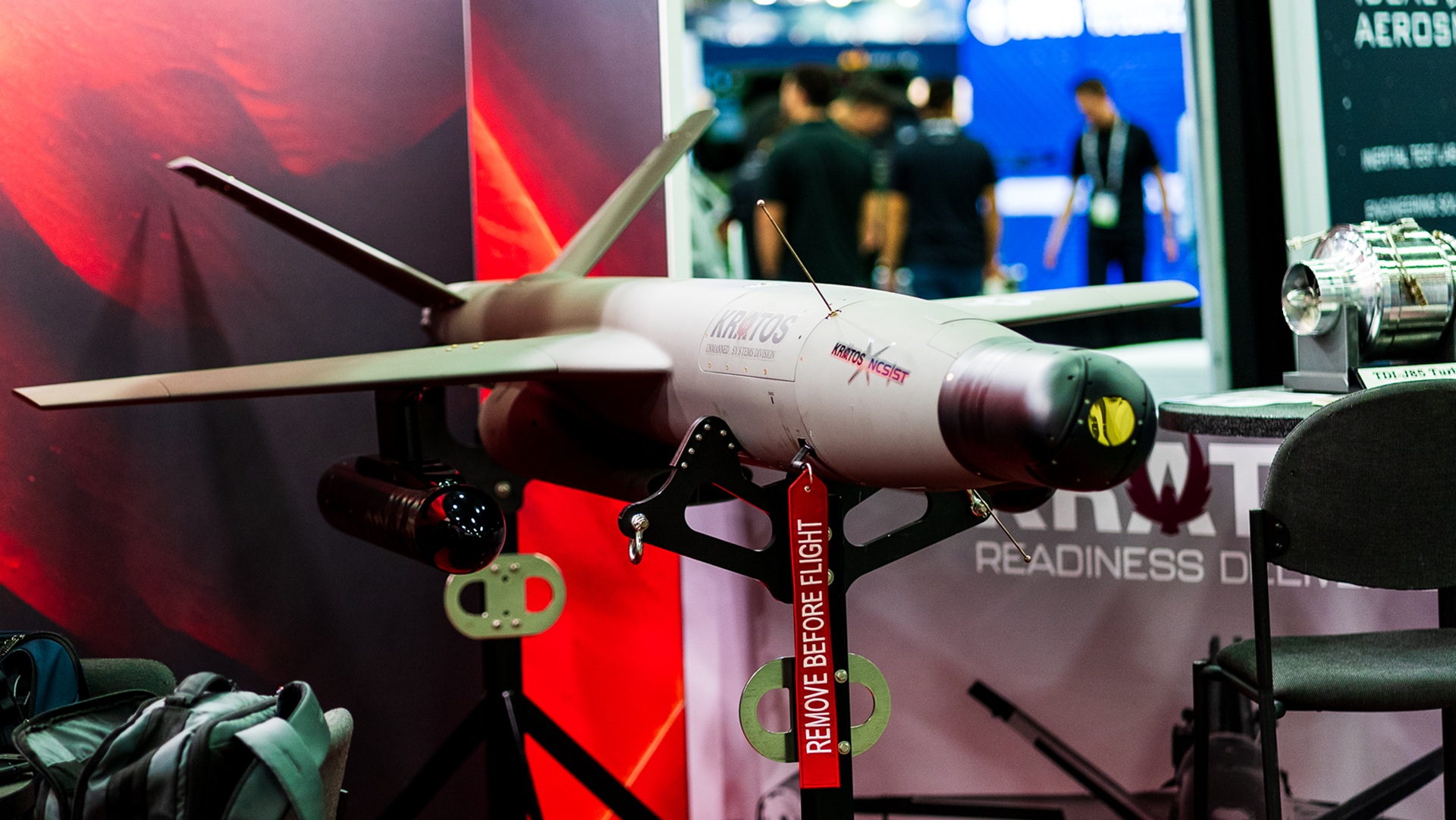
At Xponential 2026, the global aerospace and defense industries converged on Detroit’s Huntington Place to showcase the future of drone technology. The exhibition floor featured everything from jet ski-style unmanned systems to aircraft-scale drones pushing the boundaries of mobility, surveillance and defense.
Yet amid the international presence and cutting-edge displays, Michigan’s own innovators stood out with technologies that demonstrated the state’s growing influence in the rapidly evolving aerospace and defense sectors. Here are seven technologies that caught our attention at Xponential 2026.
Windracer ULTRA
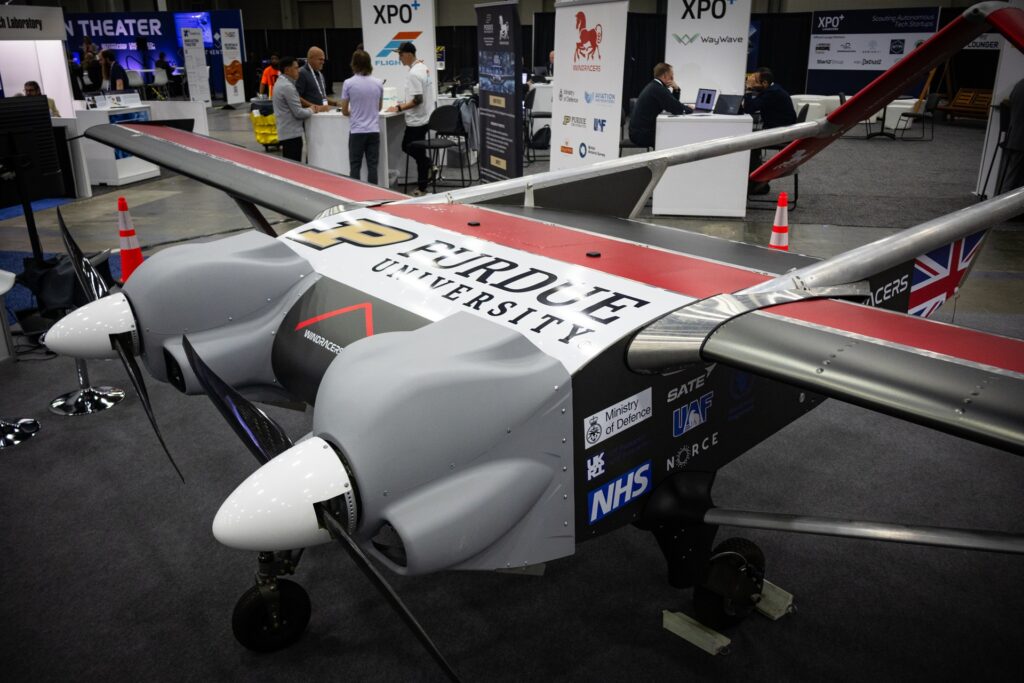
(Photo by Corey Sims, Automation Alley)
The largest drone on display at Xponential 2026, the Windracers ULTRA is designed for autonomous resupply missions in remote and high-risk environments. The aircraft can carry up to 440 pounds of cargo, delivering supplies either by parachute drop or short-runway landing. With a range of roughly 1,200 miles and up to 12 hours of flight time, the ULTRA is built for long-distance operations in challenging conditions.
The drone has already proven itself in missions around the world, including resupplying Ukrainian troops on the front line, delivering goods to remote Alaskan villages, and supporting research operations in northern Finland.
UK-based Windracers currently operates a fleet of several dozen autonomous aircraft.
University of Michigan College of Aerospace and Engineering’s Drone Defense Turret
(Photo by Corey Sims, Automation Alley)
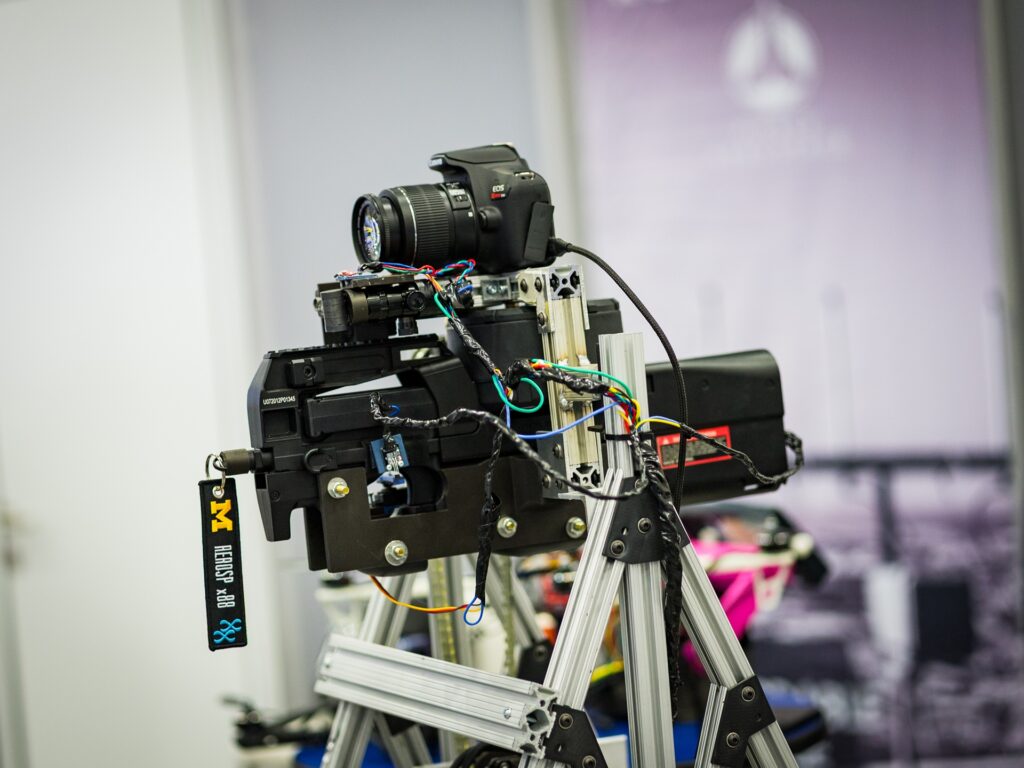
As drones become increasingly central to modern warfare, counter-drone technology is emerging as one of defense’s fastest-growing sectors. The economic imbalance is stark: multi-million-dollar missile systems are often deployed against drones that cost only a fraction of that amount to produce. Defense firms and researchers alike are now racing to develop lower-cost, scalable solutions.
At Xponential 2026, students from the University of Michigan showcased a prototype counter-drone turret designed with affordability and adaptability in mind. The system features advanced vision technology, multi-axis target tracking and a modular weapons platform capable of integrating different defense tools. For demonstration purposes, the prototype was equipped with an airsoft gun.
The Detroit Defense Autonomy Kit
(Photo by Corey Sims, Automation Alley)
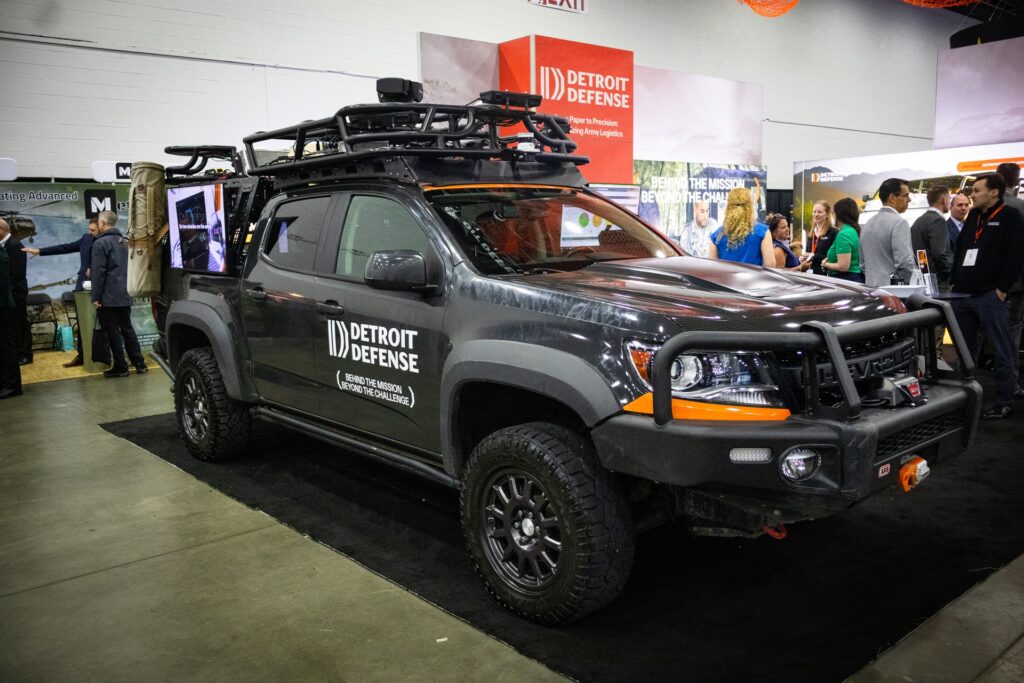
Detroit Defense showcased its autonomous mobility technology at Xponential 2026, highlighting a bolt-on autonomy kit designed to convert existing fleet vehicles into autonomous platforms. Mounted directly to the roof of a vehicle, the Detroit Defense Autonomy Kit offers an alternative to the industry’s more common approach of building autonomous vehicles from the ground up.
Designed for scalability across commercial, security and defense fleets, the system can be configured based on operational needs. A full kit includes lidar, high-fidelity cameras, GPS integration and a rear sensor array, allowing traditional vehicles to be rapidly upgraded with autonomous capabilities.
Blueflite Cobalt Drone
(Photo by Corey Sims, Automation Alley)
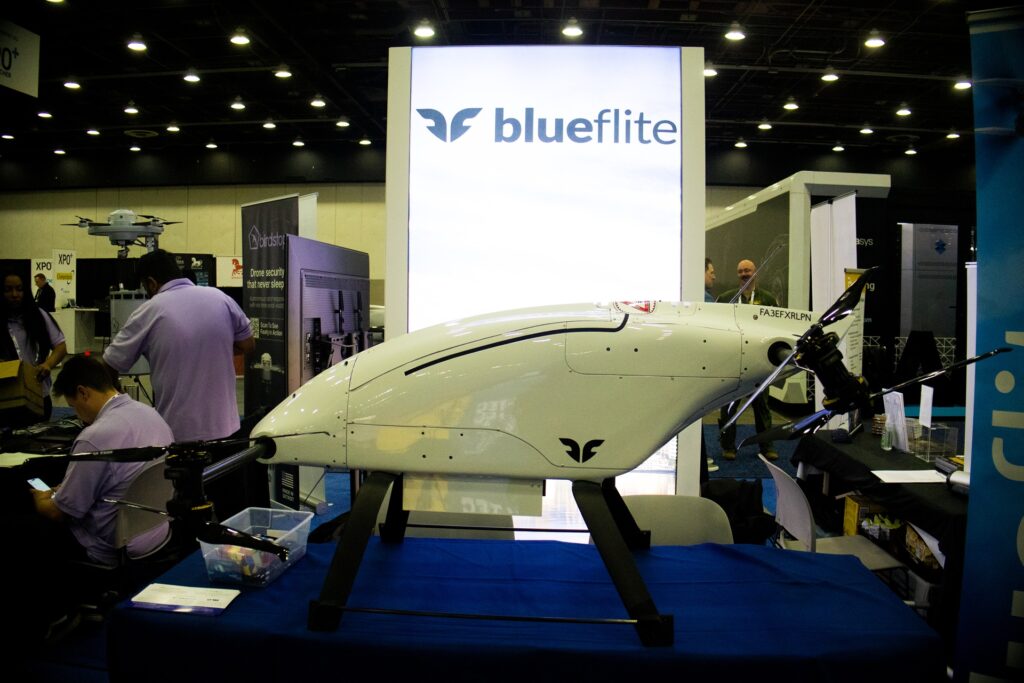
In emergency medicine, speed can mean the difference between life and death — a challenge Blueflite is aiming to solve through autonomous aerial delivery. The Michigan-based company showcased its Cobalt drone at Xponential 2026, highlighting how drones could accelerate the transport of critical medical supplies.
The aircraft features lightweight 3D-printed panels, a carbon-composite frame and an eight-propeller design engineered for stable, high-speed flight. Blueflite envisions the platform supporting rapid delivery of blood, defibrillators and other time-sensitive medical supplies, particularly in emergencies where traditional transportation may be too slow.
Amazon MK30 Delivery Drone
(Photo by Corey Sims, Automation Alley)
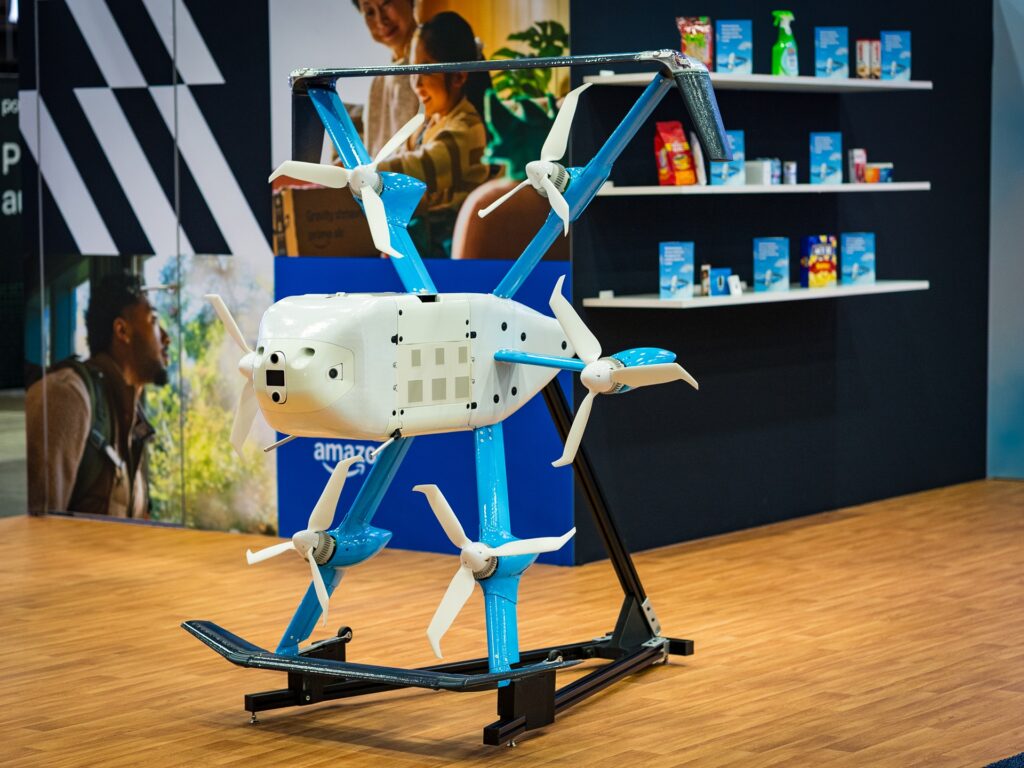
Amazon is turning Metro Detroit into one of the world’s testing grounds for autonomous package delivery. The region is among just 10 global markets selected for the company’s drone delivery program, with more than 10,000 deliveries already completed from fulfillment centers in Hazel Park and Pontiac.
Customers within a seven-mile radius of those facilities can choose drone delivery for packages weighing up to five pounds. Using a designated drop zone — such as a porch, patio or backyard — the system autonomously delivers and releases packages directly at the selected location.
At the center of the program is Amazon’s fully electric MK30 drone, designed to operate more quietly while meeting FAA safety requirements. What once felt like science fiction is increasingly becoming part of the everyday logistics landscape in Metro Detroit.
Stratasys’ Polyjet 3D Printed Parts
(Photo by Corey Sims, Automation Alley)
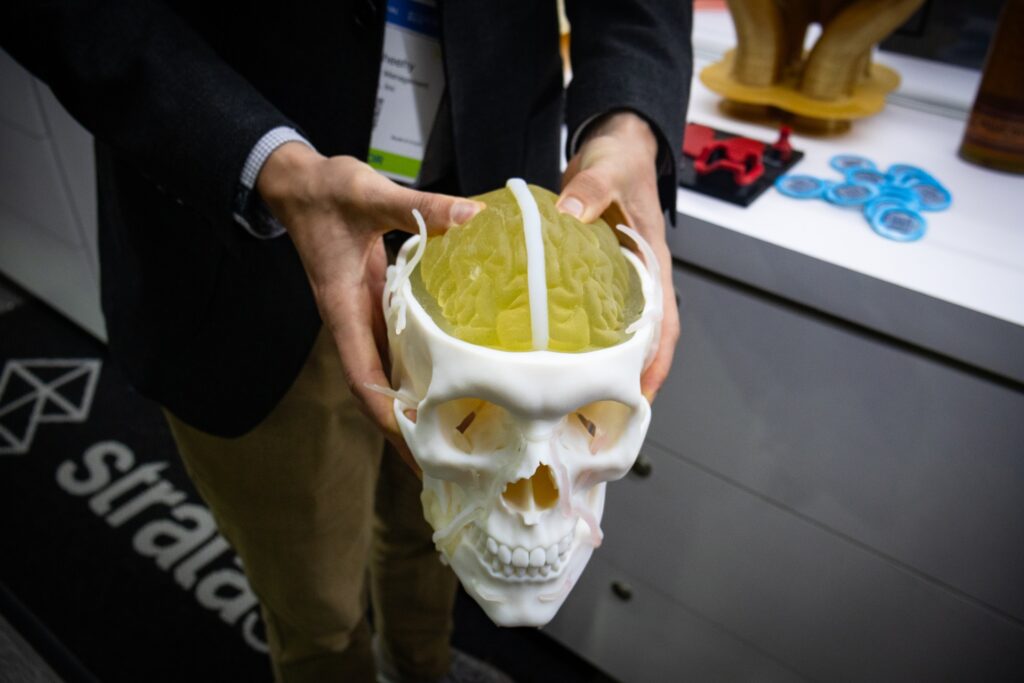
While Stratasys showcased impressive drone-related applications at Xponential 2026, some of its most visually striking technology came from its PolyJet 3D printing systems. The printers are capable of producing multiple materials simultaneously on a single print bed, dramatically reducing the need for post-processing or assembly.
One standout example was a highly detailed human skull model created for medical applications. The print combined rigid, bone-like materials with softer, flexible materials representing nerves, alongside a gelatinous material simulating brain tissue — all produced in a single print. The result demonstrated how multi-material additive manufacturing is enabling increasingly realistic medical models and advanced simulation tools.
Eureka Dynamics Gyroscope Drone Tester
(Photo by Corey Sims, Automation Alley)
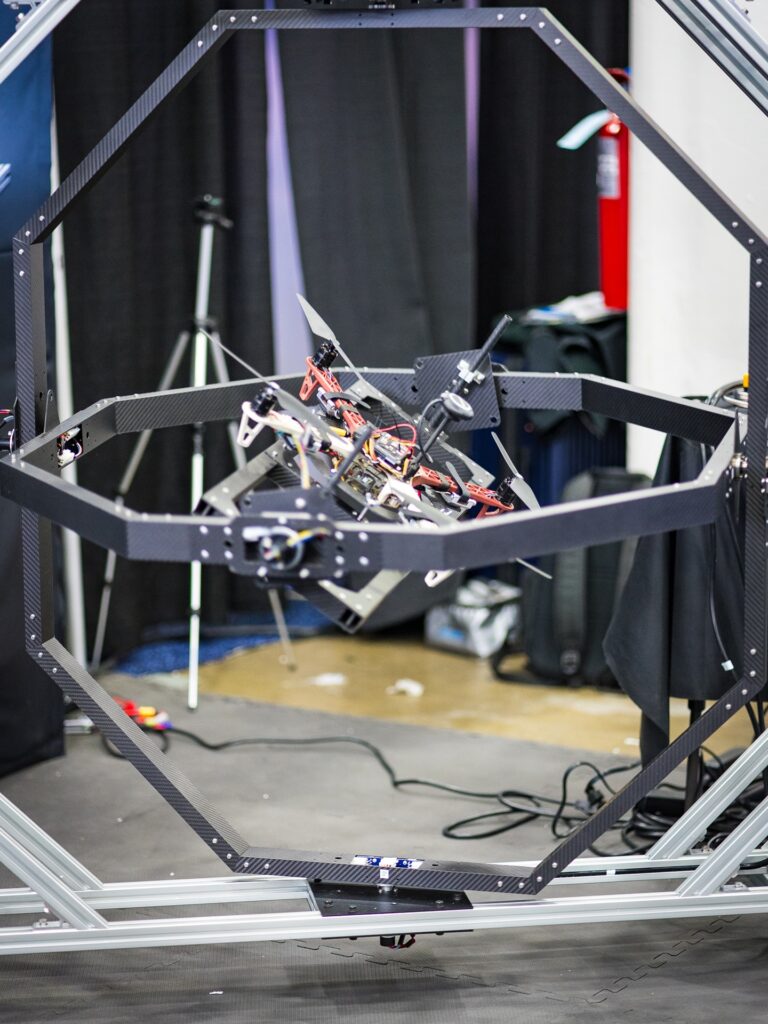
For years, drone testing carried significant risk. Even minor adjustments to a servo, mount or control system could result in catastrophic failure once an aircraft left the ground. Eureka Dynamics is aiming to change that with a safer, more controlled approach to drone development and certification.
The company’s FFT-GYRO system allows drones to be tested in a contained environment while still simulating real flight conditions. Built from carbon fiber and measuring up to five meters in diameter, the gyroscopic platforms enable engineers and researchers to evaluate performance, stability and control systems without risking the loss of an aircraft.
The systems are already being used in university drone programs around the world and are available in enclosed or open configurations with customizable sensors and digital twin integration capabilities.
What Goes Up …
These were seven of the technologies that stood out to us during Xponential 2026, showcasing the rapid evolution of drones, autonomy and advanced manufacturing across industries ranging from defense to healthcare.
Automation Alley was proud to represent Michigan manufacturers and the state’s growing innovation ecosystem throughout the event as an exhibitor. As Xponential continues its rotating host-city format, the conference will head to Miami in 2027.
Dennis Burck is Automation Alley's Digital Content Editor, responsible for the organization's content strategy and development. Dennis is a seasoned media-savvy professional who builds relationships with Automation Alley members and partners to create the most relevant digital transformation stories.