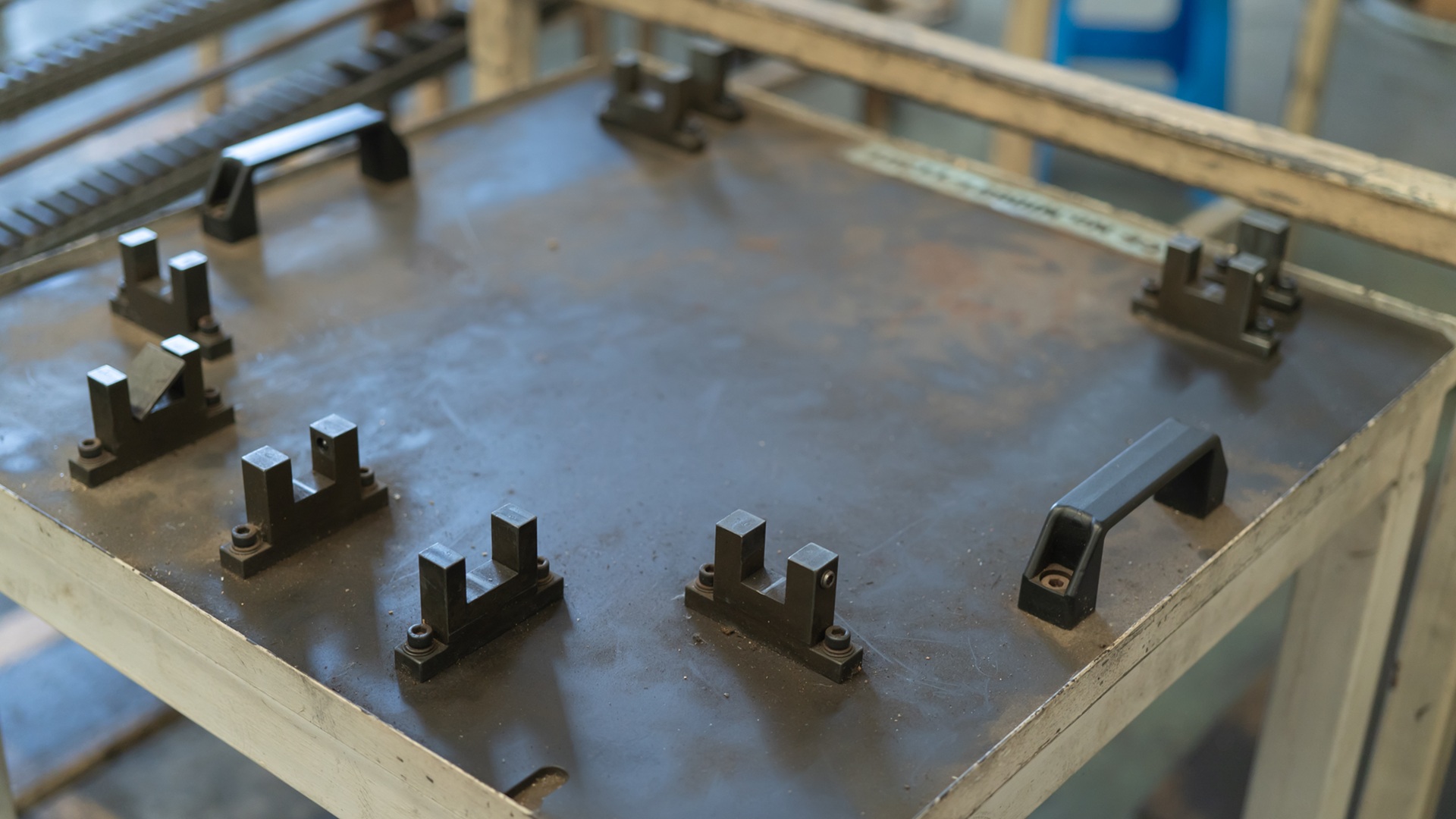
Whether it be a jig, clamp, welding fixture, or vise, fixturing is essential to certain manufacturing processes. Fixturing aims to hold, support, position, or secure workpieces, facilitating accurate and consistent results. Fixturing techniques lead to greater accuracy, productivity, safety, and product quality.
What is Fixturing?
Fixturing is the process of designing or using tools to securely hold a workpiece in place during manufacturing. It ensures stability, precision, and repeatability for tasks like machining, assembly, or inspection. Proper fixturing prevents movement, reduces error, and increases efficiency in production workflows.
Types of Fixtures
Manufacturing fixtures are specialized tools used to secure and position workpieces during production processes. The four primary types include assembly, inspection, marking, and welding fixtures, which collectively improve accuracy, repeatability, and efficiency across industries like automotive, aerospace, and electronics.. The 4 main type of fixtures consist of assembly fixtures, inspection fixtures, marking fixtures, and welding fixtures.
Assembly fixtures
Assembly fixtures are specialized manufacturing tools designed to secure, position, and align components during the production process. By holding parts in a fixed orientation, these fixtures ensure accurate fit and function, resulting in increased assembly speed, reduced human error, and higher overall productivity in sectors such as automotive, appliance production, electronics, and aerospace.
Read this article in full here.