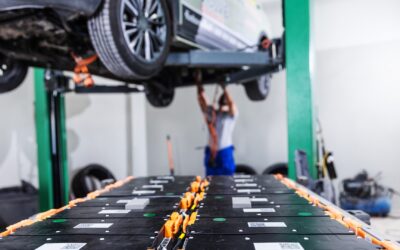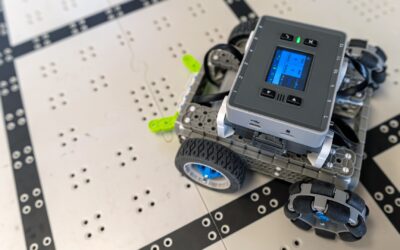
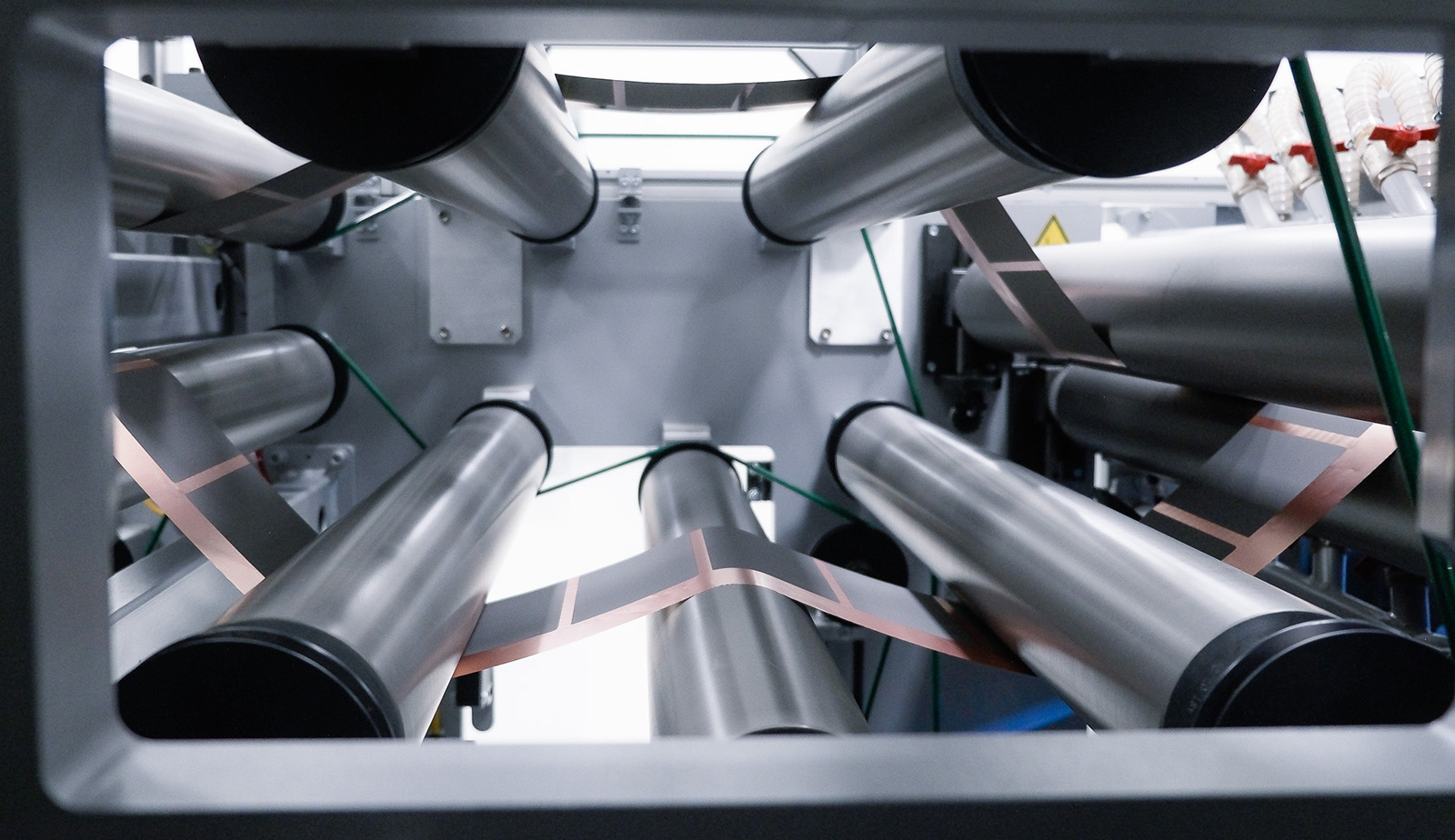
Some of the most consequential work in battery manufacturing takes place where a customer will never see it: in a coating on a thin sheet of metal, in the pores that must absorb liquid, in a weld whose surface can conceal a flaw. Each is a small detail. Repeated across a production line, they determine whether a promising battery becomes a dependable product.
These are the details Fraunhofer will showcase at The Battery Show 2026 in Detroit.
The German applied research organization and its US affiliate has a history of work that finds its way into everyday life. Its researchers helped develop MP3 audio, pioneered laser powder bed fusion for metal 3D printing and contributed to advances in white LED lighting. The technologies are familiar. The research behind them is often less so.
At booth #4429 in the German Pavilion, Fraunhofer USA Inc. and the Fraunhofer Battery Alliance will offer a closer look at the research behind battery manufacturing—and the exacting work of moving it into production.
Battery Cell Development and Production
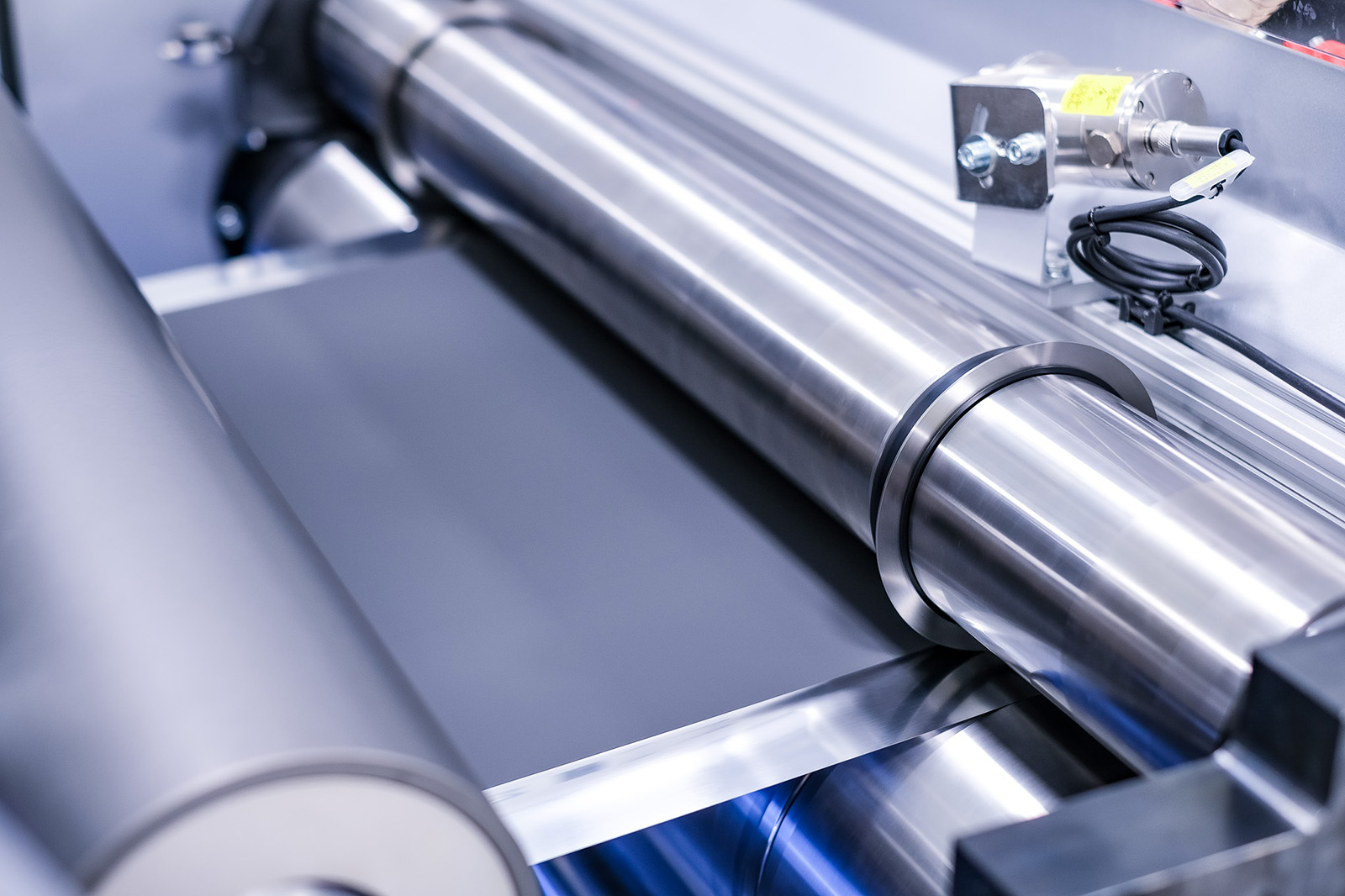
(Image Courtesy Fraunhofer FFB)
Manufacturing a battery cell involves a sequence of tightly controlled steps. Materials are mixed and coated onto metal foils to form electrodes, which are then cut and stacked or wound with a separator between them. The assembly is enclosed in a cell housing, filled with electrolyte and sealed. Initial charging cycles activate the cell, followed by aging and testing to assess its quality and performance.
Each stage must work reliably with the next to turn a battery design into a product that can be manufactured at scale.
Fraunhofer’s prototype assembly provides a seamless path from process design to sensor-enabled prototypes and smooth transfer to series production.
Fraunhofer’s exhibit includes a 3D model of a pilot electrode coating line, illustrating the equipment used to refine this process before scaling up. It addresses a question that follows every promising laboratory result: Can a manufacturer reproduce it, reliably, across a production run?
Electrolyte Filling Equipment
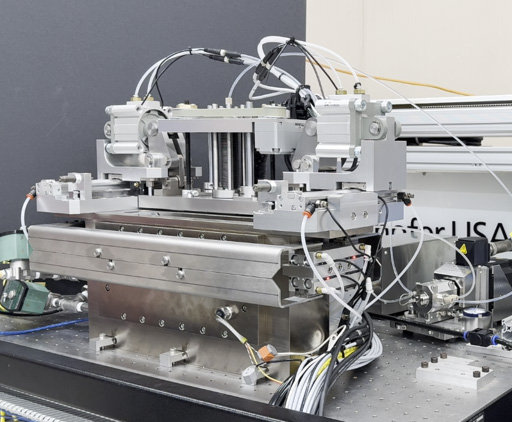
Electrolyte filling system before integration into the modular base machine, including vacuum/pressure chamber, dosing system, and pouch sealing. (Image Courtesy Fraunhofer USA)
Adding liquid to a battery sounds straightforward. Getting it where it needs to go is another matter.
Electrolyte carries ions between a battery’s electrodes during charging and discharging. During manufacturing, it must thoroughly wet the porous electrodes and separator inside the cell. How effectively it does so affects performance, life span and safety.
Fraunhofer’s modular filling system accommodates different cell formats and chemistries on a single machine platform. This is part of the organization’s broader work developing special-purpose equipment for battery cell manufacturing. Visitors can examine the equipment and learn about the research behind a manufacturing step whose importance is easy to overlook.
AI-Assisted Weld Inspection
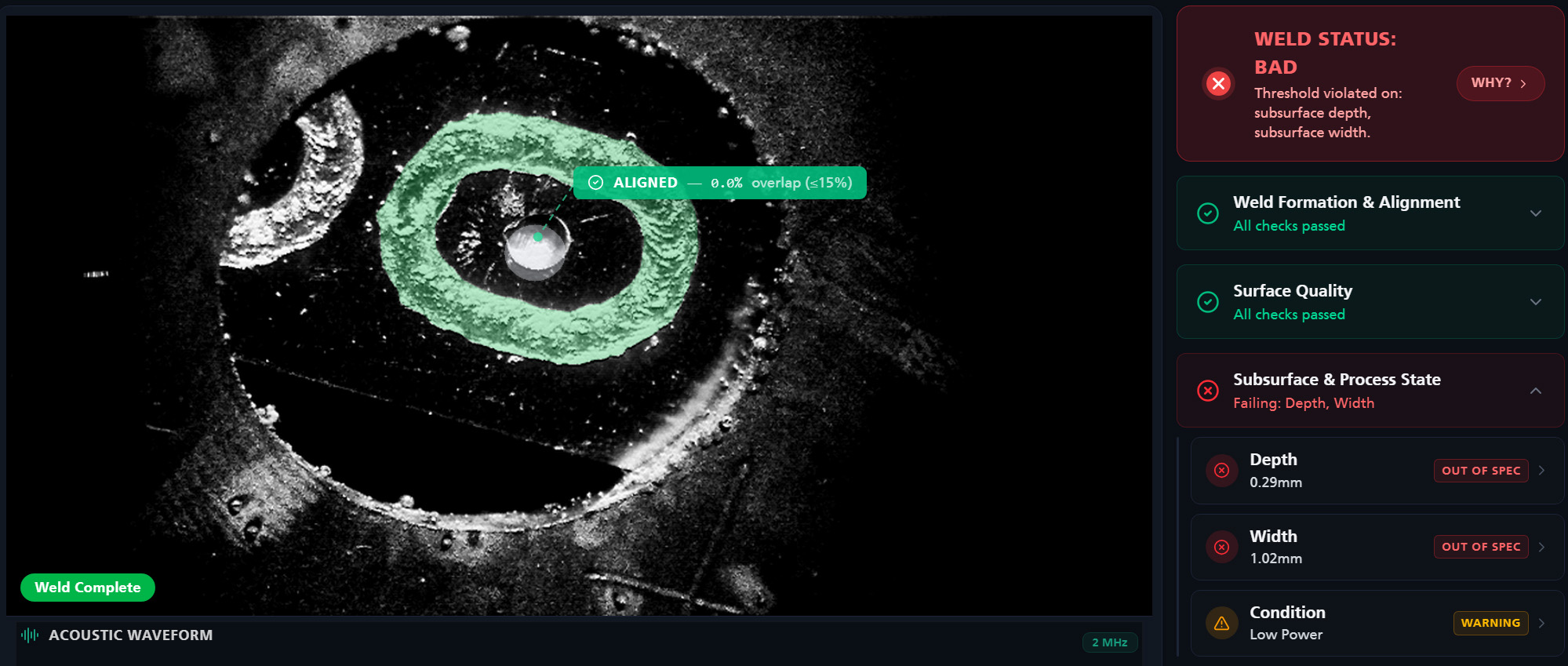
Real-time AI analysis of a laser weld. (Image Courtesy Fraunhofer USA)
A weld can look sound to the human eye, yet still hide a problem.
Fraunhofer USA’s AI-assisted inspection system combines high-speed camera images, sound and machine data to assess laser weld quality in real time. Demonstrated on battery busbars, it identifies potential defects such as incomplete fusion and insufficient penetration, classifying each weld as good, bad or repairable.
The aim is to assess every weld as production proceeds. Catching a defect at that stage could mean less scrap, less rework and fewer faulty components advancing down the line.
Together, these technologies reveal how much the future of batteries depends on the discipline of making them. For manufacturers visiting Fraunhofer’s booth, the opportunity is to examine that work with the researchers behind it—and discuss what it could mean for their own production challenges.
The Battery Show takes place Oct. 12-15 at Huntington Place in Detroit, with exhibits open Oct. 13-15. Register here and visit Fraunhofer at booth #4429.