The global manufacturing economy is entering a period of heightened uncertainty.
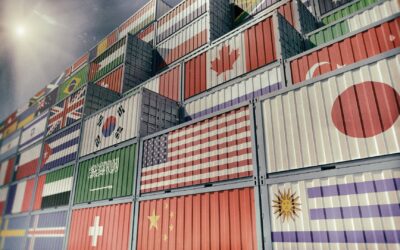
Trade policy, tariffs, geopolitical tensions and supply chain realignment are reshaping how manufacturers source materials, evaluate risk and plan for growth. What was once primarily a question of cost has become a broader discussion about resilience, competitiveness and national economic security.
Across Integr8 roundtable conversations with leaders from industry, academia and government, one theme emerged repeatedly: trade uncertainty is no longer a temporary disruption. It is becoming a permanent feature of the manufacturing landscape.
“We had conversations about the difficulty of planning in today’s geopolitical world and so on and so forth, but planning is a really holistic part of being better, and being better amplified by technology, specifically AI,” President of MMA John Walsh said.
While the challenges are significant, many leaders also see opportunities to strengthen domestic manufacturing, diversify supply chains and build more resilient operations. Much like the workforce transformation discussed in previous Integr8 conversations, success will depend on how organizations adapt to a rapidly changing environment.
Challenges
Navigating a New Era of Uncertainty
For decades, manufacturers operated under assumptions of increasingly globalized trade and relatively stable international supply chains. Those assumptions are being tested.
According to the Federal Reserve Bank of Richmond’s CFO Survey, more than 30% of surveyed firms identified trade and tariffs as their most pressing business concern in early 2025, a dramatic increase from just 8.3% the previous quarter.
“They’re just trying to really come to terms with what the situation is now and what is it likely to be,” Butzel Shareholder Jennifer Smith-Veluz said. “We have a little bit more stability now that the AEPA tariffs have gone away, but we know that there’s a 10% temporary tariff and then 301 investigations are underway on 60 trading partners. So yes, tariffs are the new normal.”
This uncertainty extends beyond tariff rates themselves. Manufacturers must contend with shifting regulations, evolving trade relationships and the possibility of retaliatory measures that can affect both imports and exports.
The challenge is no longer predicting a single outcome. It is preparing for multiple possible scenarios simultaneously
“To put our membership in perspective, we have 1,700 members across the state and 85% of our members are 100 employees or less,” said Walsh.
“The rest are right up to the tier ones in any number of industries, automotive and heavy. The risk that they’re taking on is preparing for the future. The uncertainty, not just of the order itself, but their pricing for the products that they need to buy, and then deliver once tooled and made ready for sale. That’s a risk.”
Read the article in full in the Integr8 Playbook “Trade, Tariffs, and Transformation: Manufacturing in a New Global Economy,” here.